Orb Weaver Spiders - Family Araneidae
Araneidae is a large assemblage of spiders, nearly all of which spin symmetrical orb webs.
Live adult spiders, hatchlings and spider eggs photographed in the wild at locations in North America.
Insects | Spiders Index | Jumping Spiders | Spiders Main | Wolf Spiders | Funnel Web Weavers
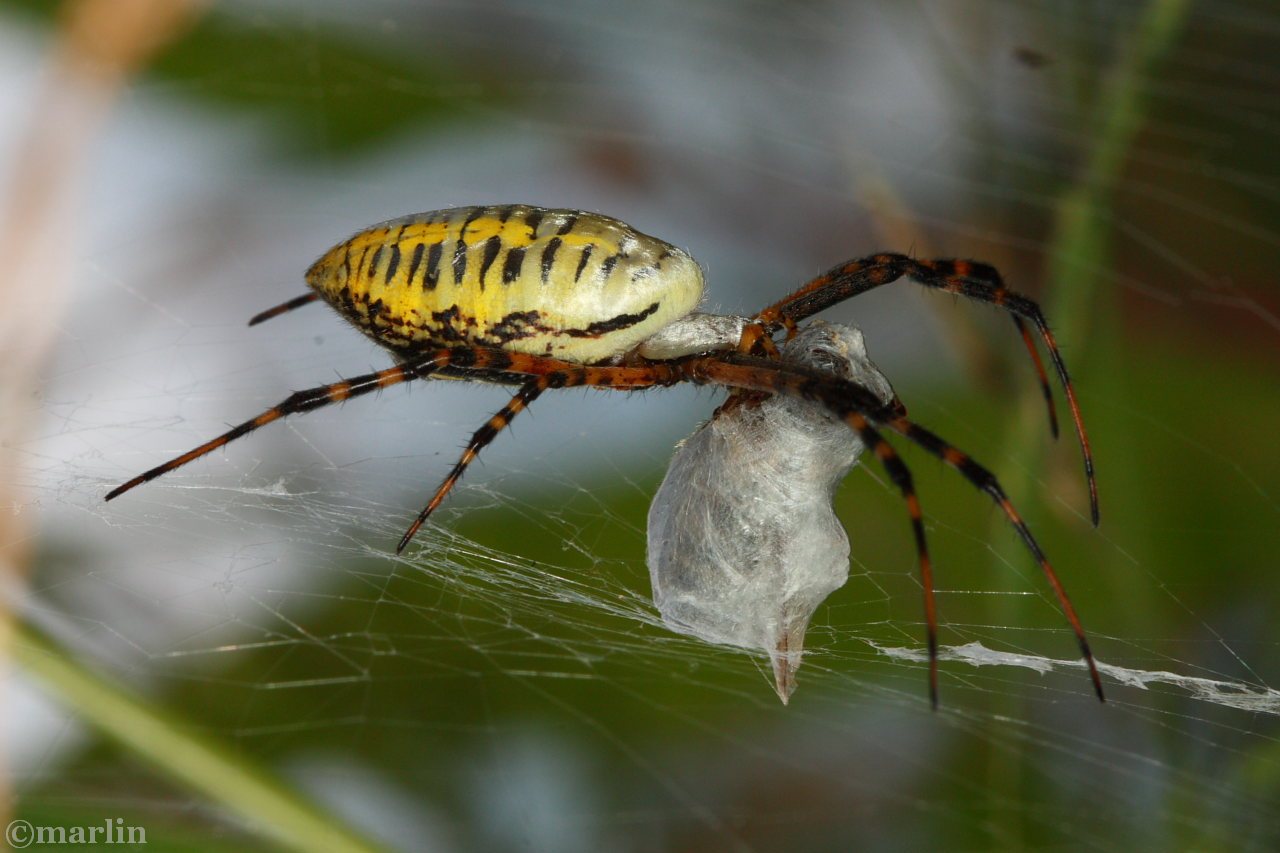
Banded Garden Spider
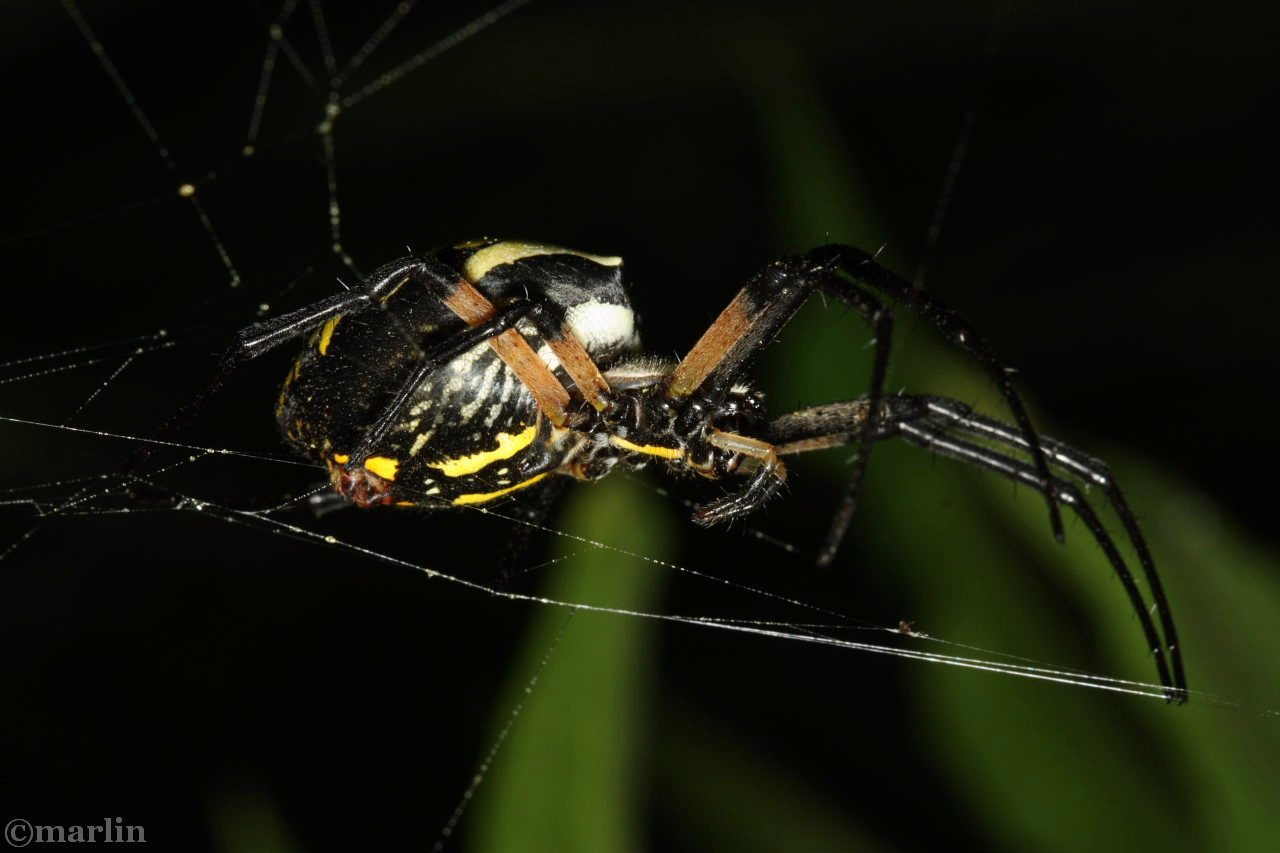
This female orbweaver's body measures 15mm, or a little less than 5/8 inch. Leg span = 35mm (1-3/8")
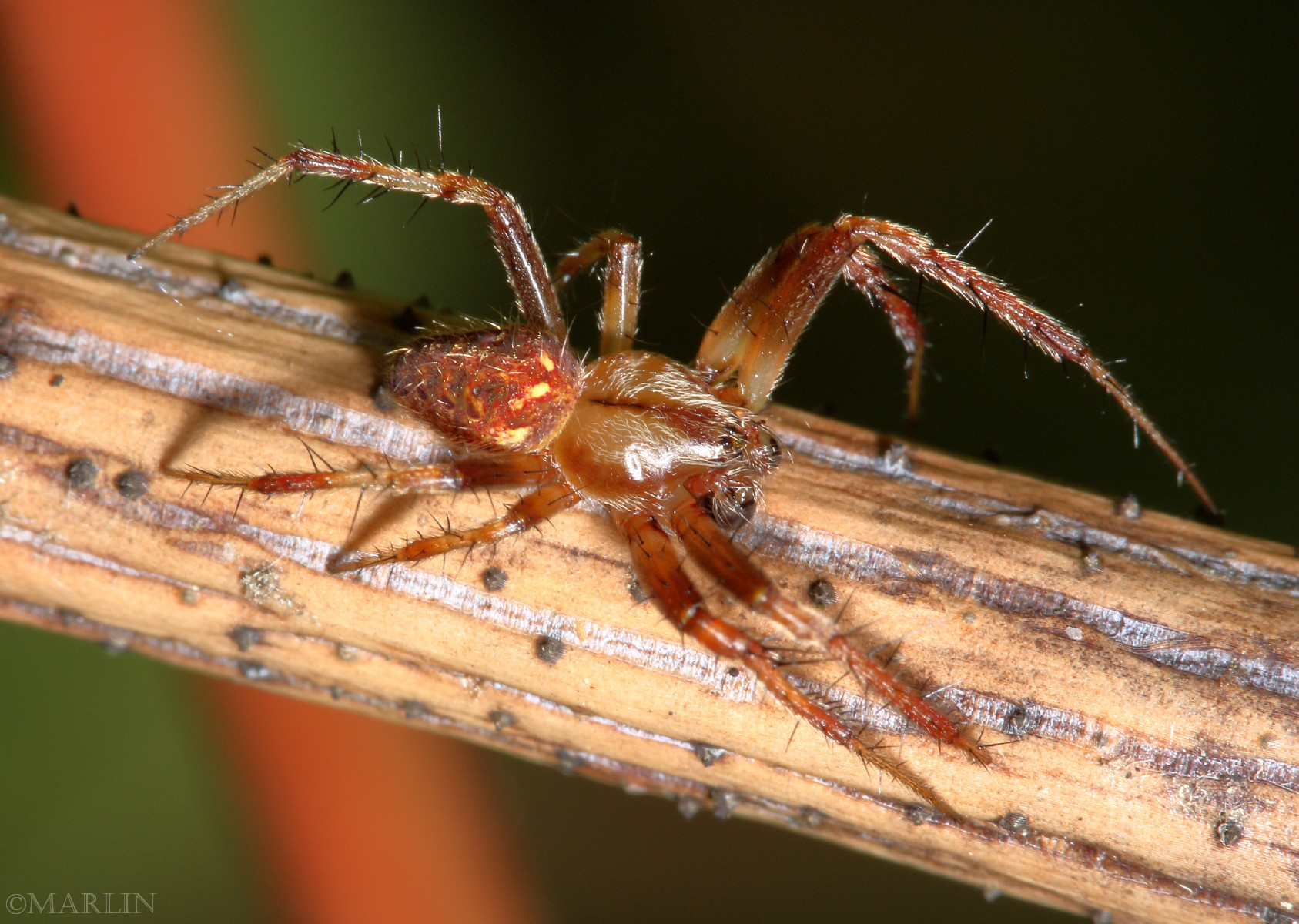
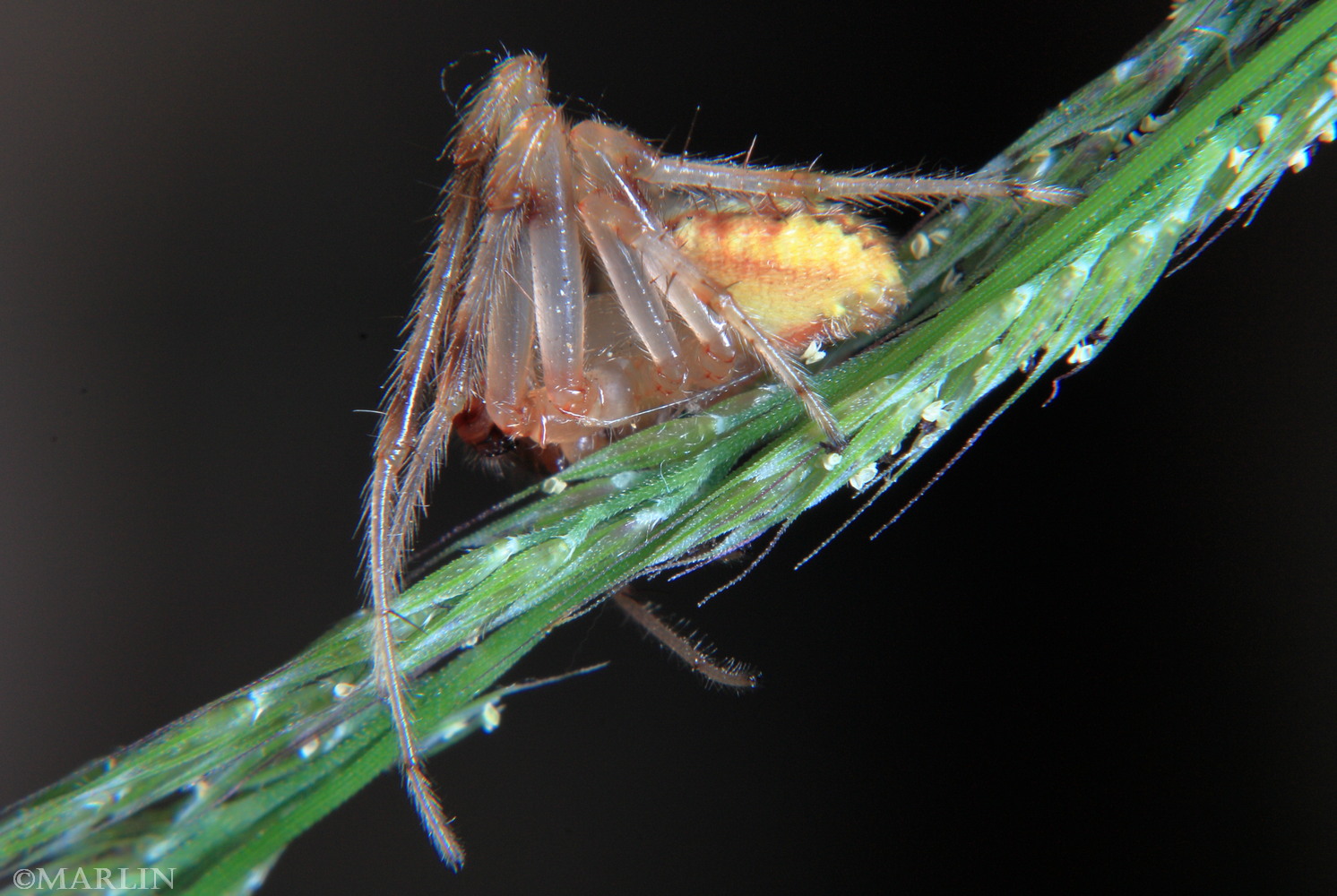
Araneidae is a large family of spiders, nearly all of which spin symmetrical orb webs. In many species, males are much smaller and less brightly colored than the females. Orb weavers have eight eyes arranged in two rows, and females typically have a large, distended abdomen which may overhang the carapace, and which may have conspicuous bumps (tubercules) or spines, e.g. Micrathena genus.

The eight legs of orb weavers are usually well-endowed with spines, with three tarsal claws the spider uses to grip its silken strands.


Argiope Spider
Black and Yellow Garden Spider
Banded Argiope
Banded Argiope - A. trifasciata
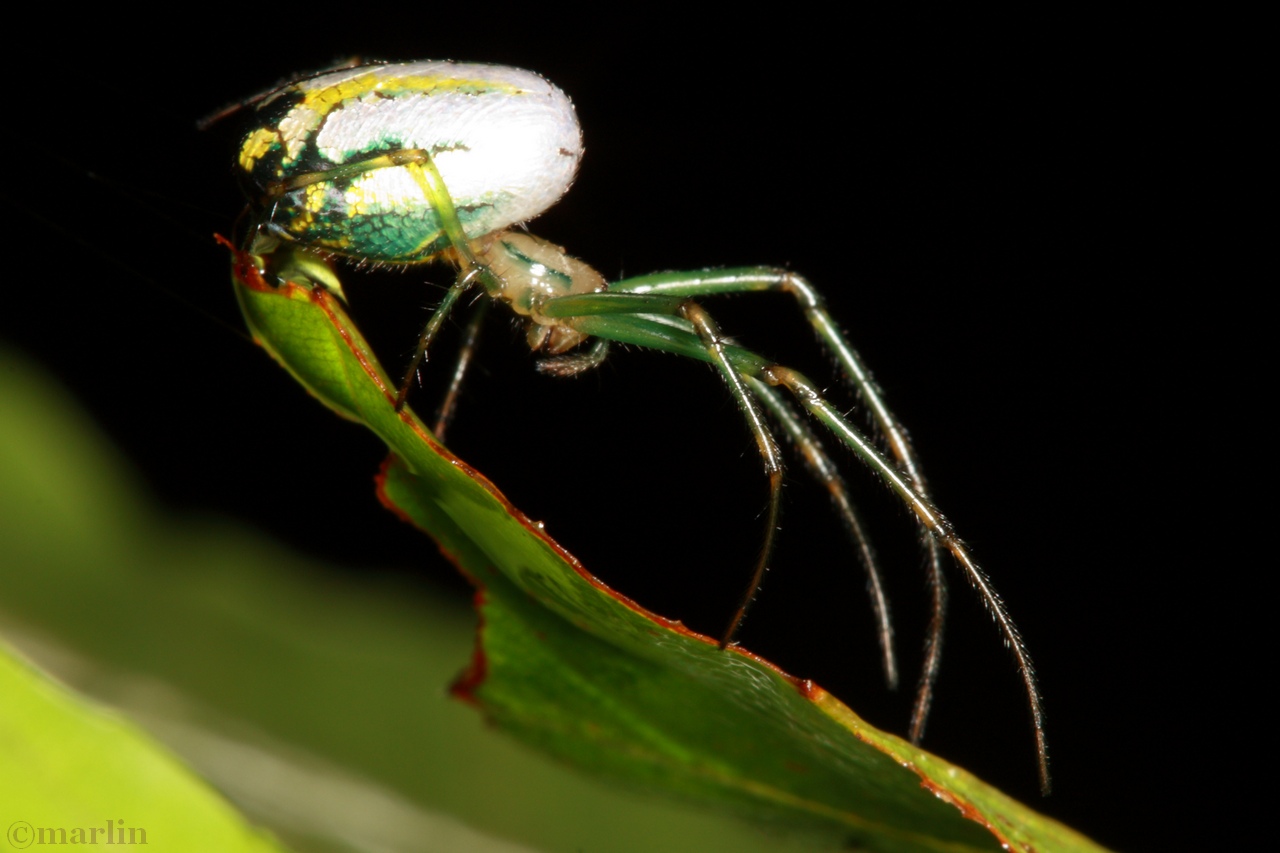
Golden Silk Orbweaver Spider
Golden Silk Orbweaver
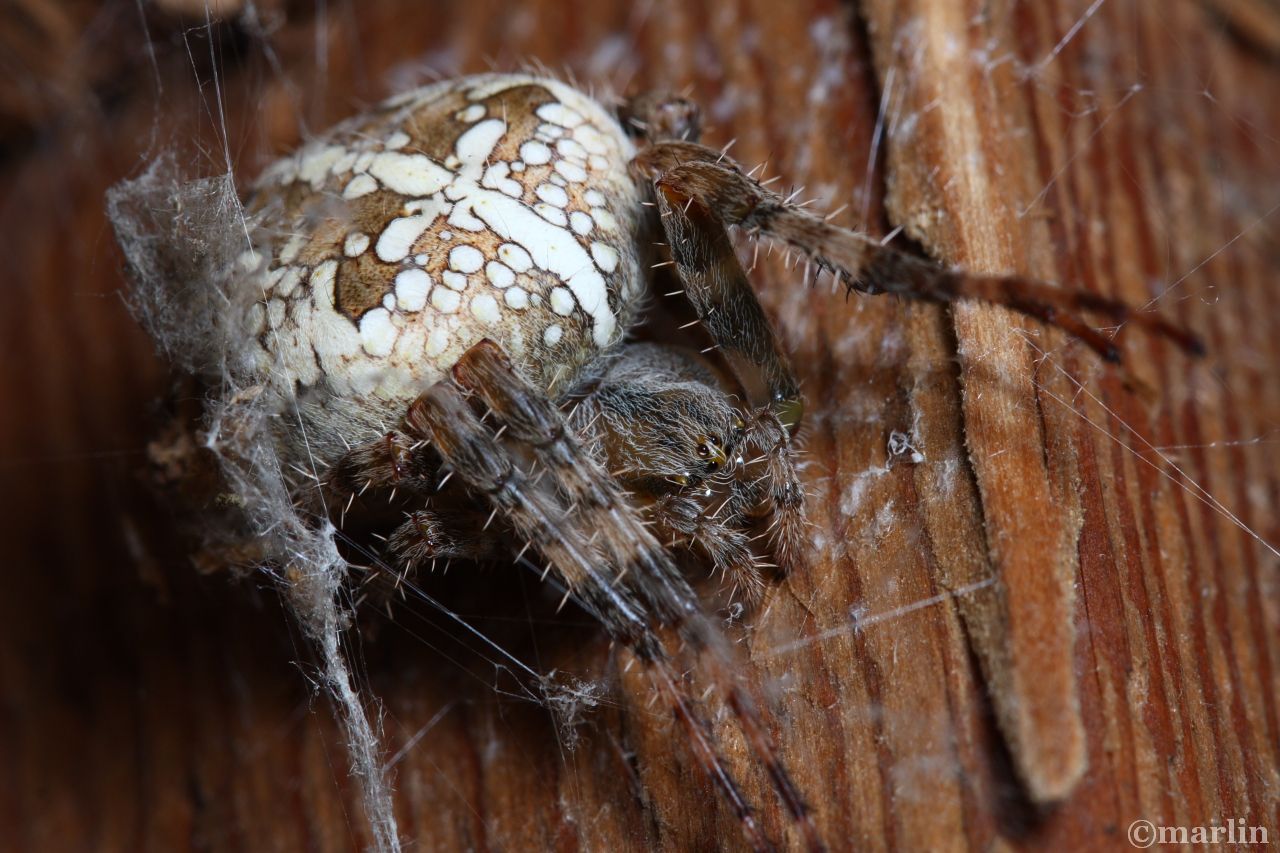
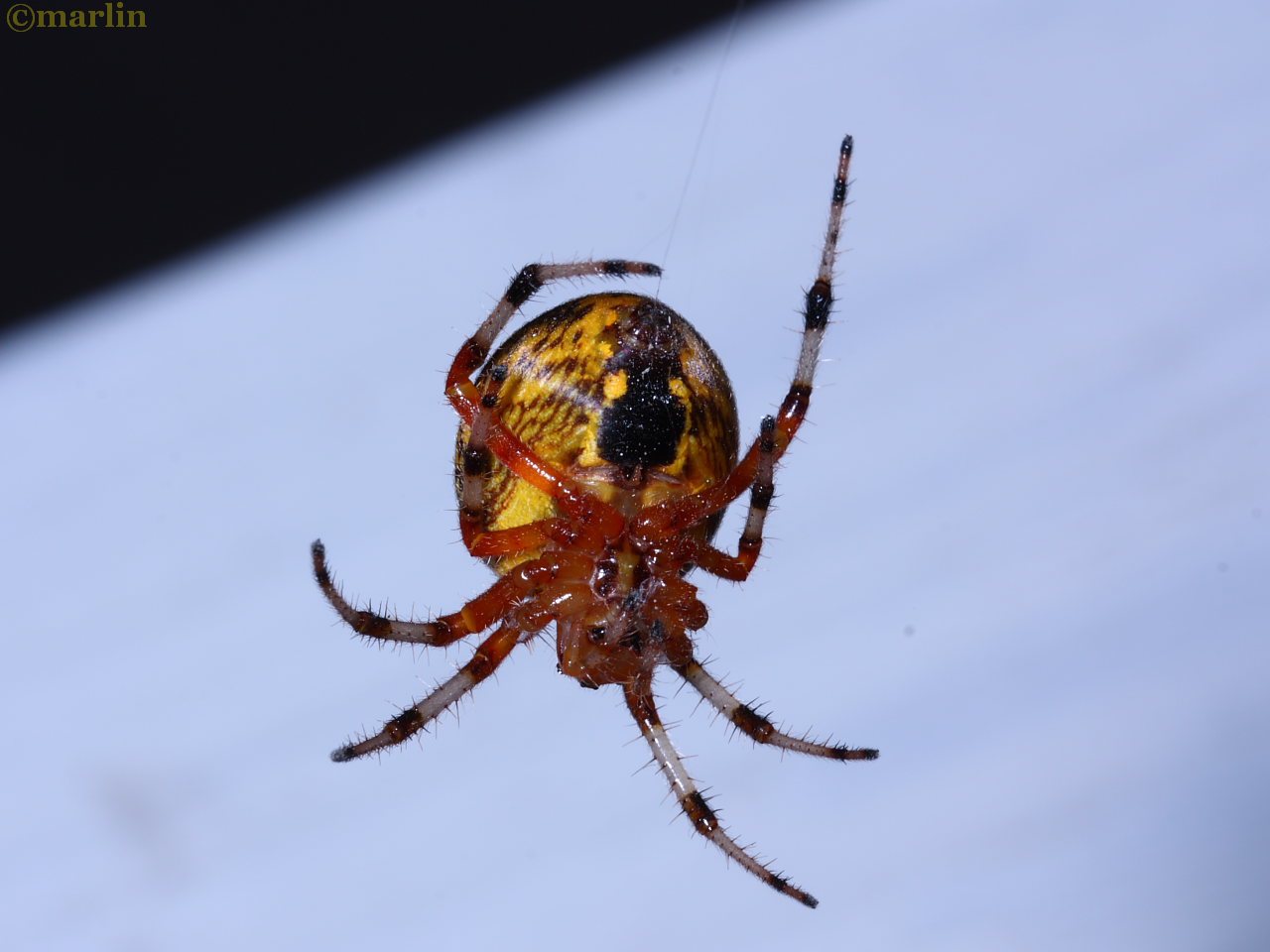
Marbled Orbweaver Spider
Marbled Orb weaver
Orb weaver spiders often add stabilimenta, or heavy zig-zagging portions, to their webs. Stabilimenta are conspicuous lines or spirals of silk, included by many diurnal spiders at the center of their otherwise cryptic webs. It has been shown spider webs using stabilimenta catch, on average, 34% fewer insects than those without. However, webs with the easily-visible markings are damaged far less frequently by birds flying through the web. It is an evolutionary tradeoff the spider can influence every time it builds a new web. The inclusion of stabilimenta is influenced by many factors, including prey density and web location.  You can read the scientific study at Behavioral Ecology magazine.
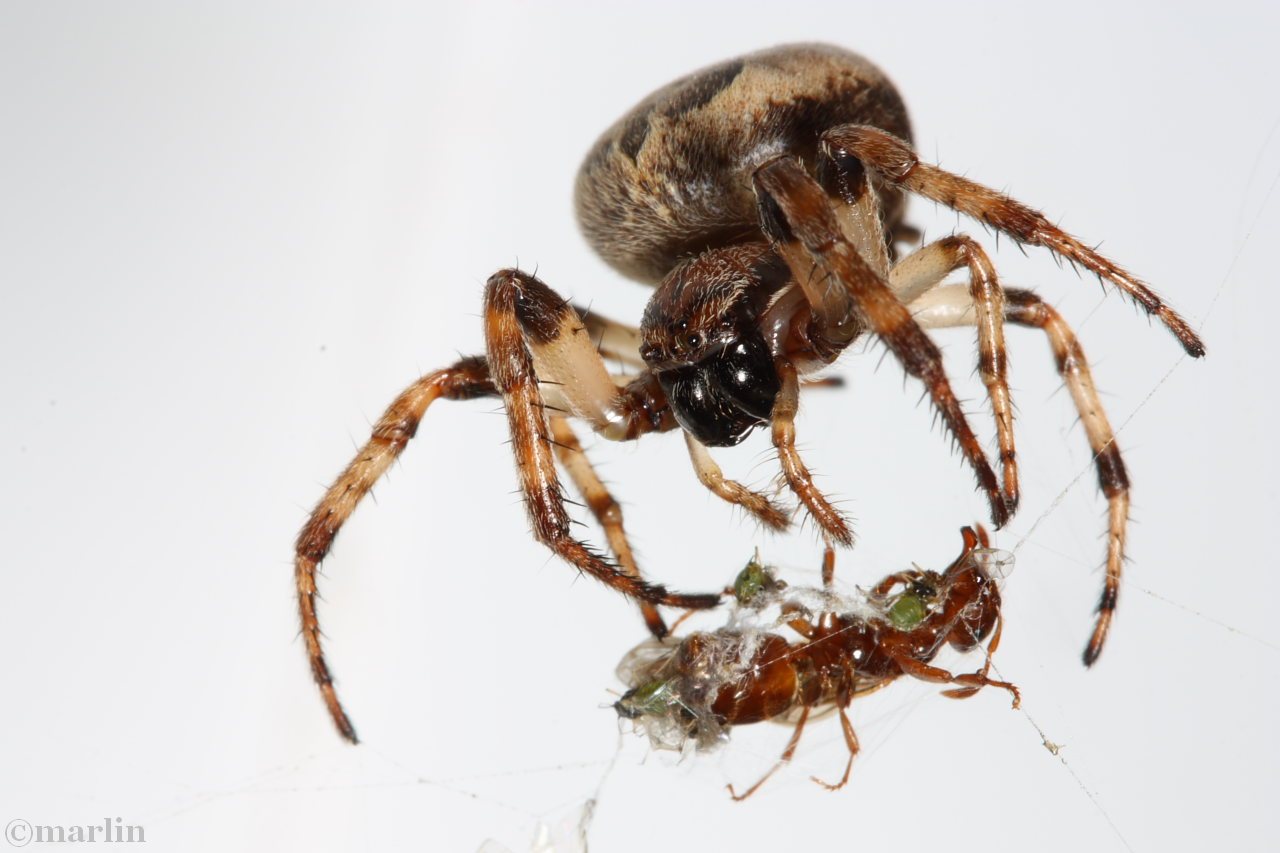
The Orb Weaver Larinioides cornutus, commonly called the furrow, or foliate spider, is very common on human structures, especially under eaves and porches. (They live on my back porch by the dozens, males and females alike in their smallish-orb webs.) Unlike their larger sisters amongst the weeds, these beautiful little rascals are strictly nocturnal, hiding in crevices or in foliage retreats from dawn till dusk.


Crowned Orbweaver - Araneus diadematus

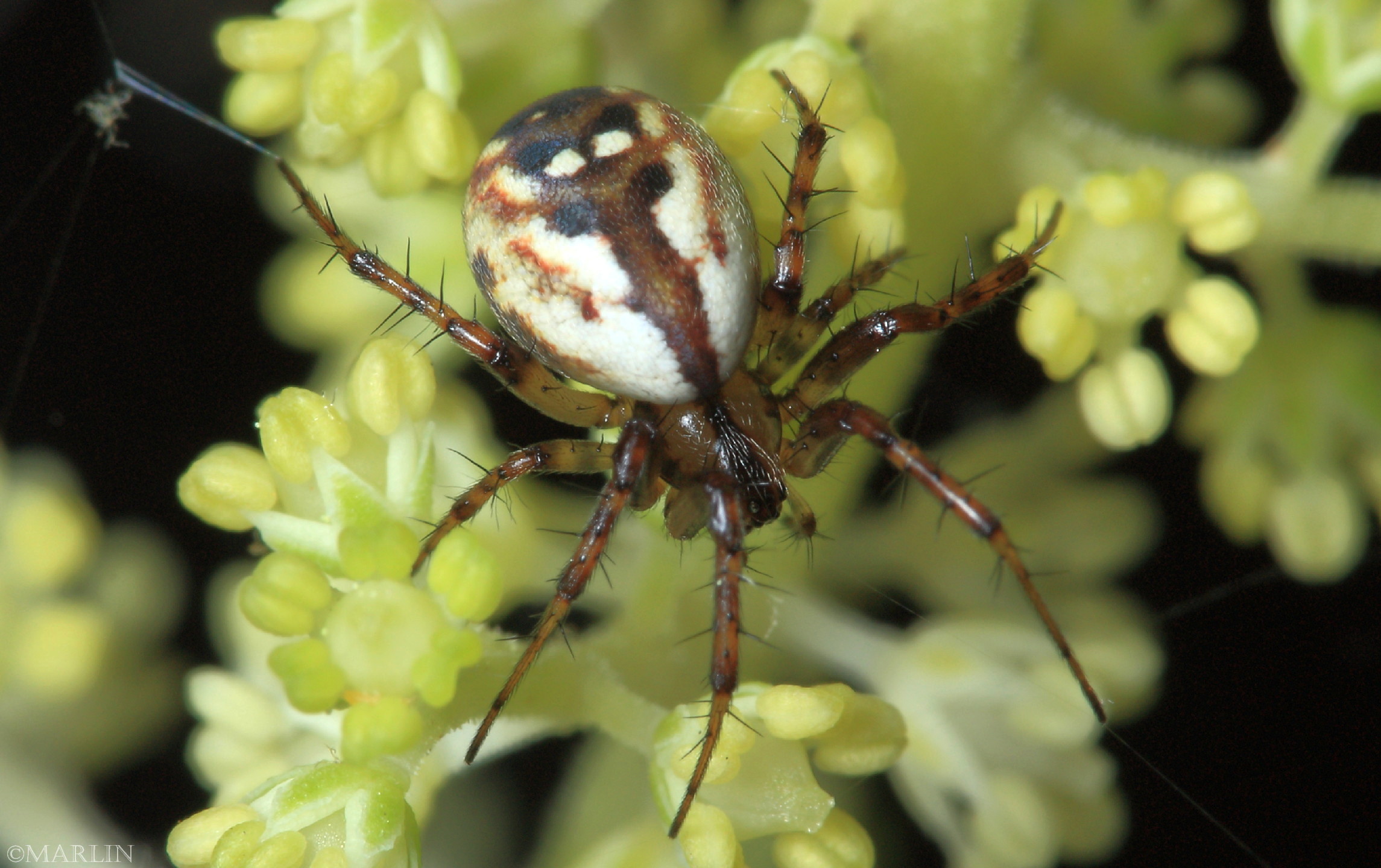
Marbled Orb Weaver Spider - Araneus marmoreus
Most orb weavers spin spiraling webs on support lines that radiate outward from the center; the plane of the web may be vertical or horizontal or somewhere in between. Many orb webs are built on human structures, parallel to walls.

Are Orb Weaver spiders dangerous? Short answer: No. Spider Bite Symptoms: Mild burning or itching, no worse than a bee sting. You'd have to work pretty hard to be bitten by one of these spiders. An orb-weaver spider bites only defensively.


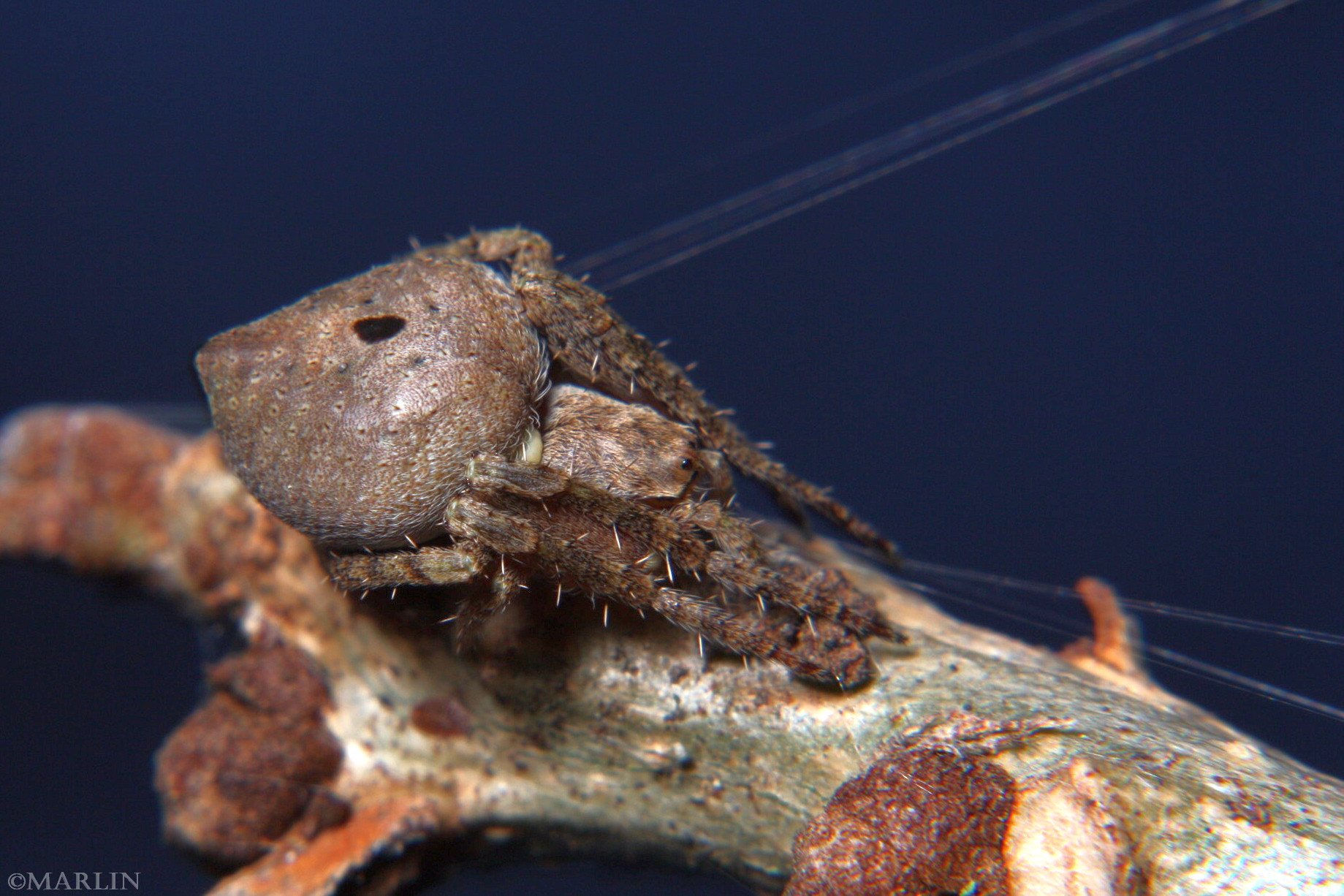
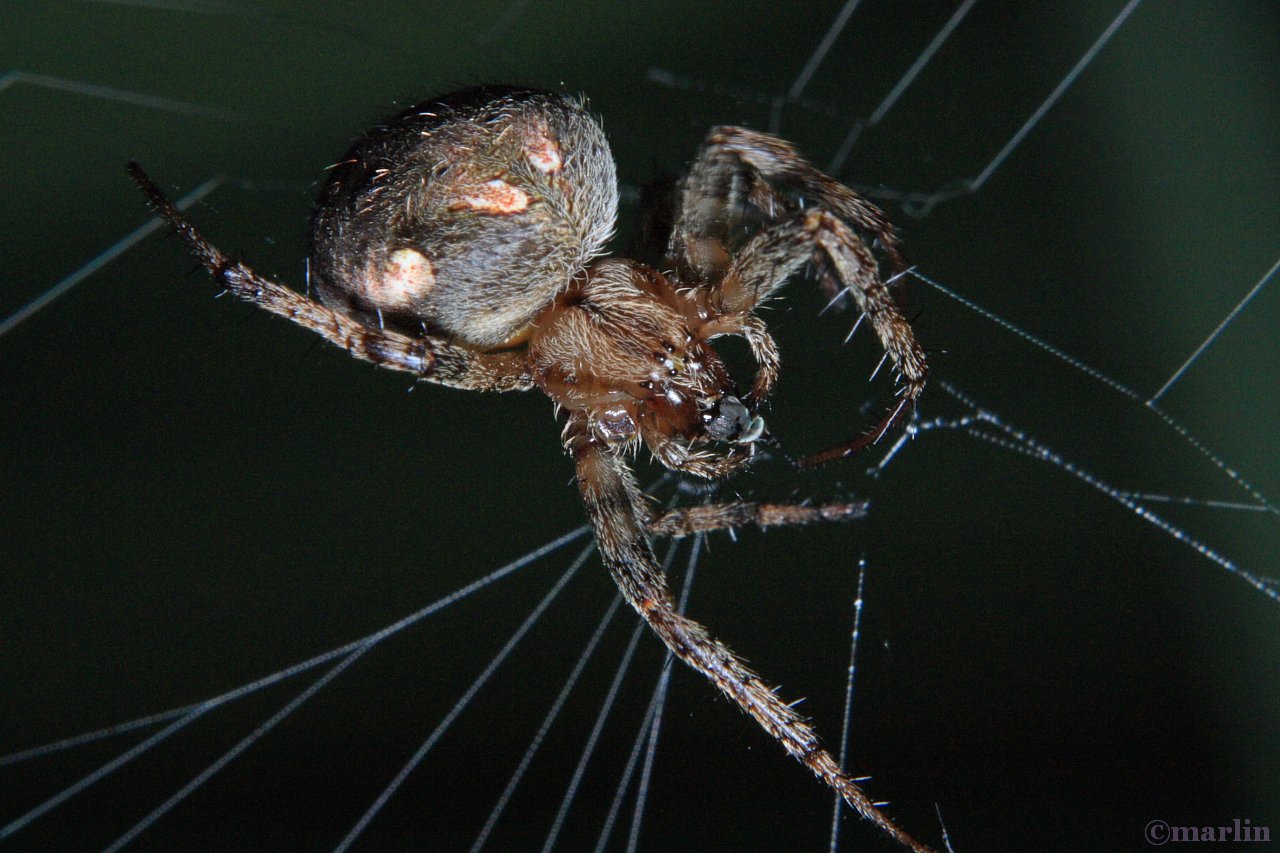
Orbweaver Spider
Gentle Orb weaver
Neoscona arabesca
Arabesque Orb Weaver
Cat-faced Spider
Cat-faced Spider
Spined Micrathena
Spined Micrathena

Orb Weaver Catches Cicada
Neoscona Orb Weaver Catches Cicada

On a hot August day, I watched this very ambitious female orbweaver capture a cicada perhaps 3 times her size. I happened upon the drama only after she had made the initial snare and I suppose she had already delivered the paralyzing bite to her prey as there was no struggle left in the unfortunate. The cicada had been trapped in her web about 4 feet off the ground, and the spider was in the process off transferring the prey to a lower, less conspicuous position.

It was an amazing feat of engineering that simply reinforced my admiration for these top predators, the spiders. Humans can barely set up a crane without it falling over and killing people, and here is an organism single-handedly, so to speak, moving three or four times her own weight the equivalent of  100 stories through thin air in a matter of about 5 minutes.


Humpback Orb Weaver - Eustala sp.
They can dish it out, but can they take it? This unfortunate orb weaver has become host to some sort of parasitic larva - you can see the white, worm-shape just behind the spider's head, on top of the cephalothorax under the overhang of the abdomen. Some have suggested it may be a mantid larva or perhaps some sort of wasp larva. It could also be a parasitic fly in the family SyrphidaeTachinidae, or Phoridae (the flies that infect the domestic honey bees). 

This from the Atlantic Magazine online:
"Consider Polysphincta gutfreundi, a parasitic wasp that grabs hold of an orb spider and attaches a tiny egg to its belly (sic). A wormlike larva emerges from the egg, and then releases chemicals that prompt the spider to abandon weaving its familiar spiral web and instead spin its silk thread into a special pattern that will hold the cocoon in which the larva matures. The “possessed” spider even crochets a specific geometric design in the net, camouflaging the cocoon from the wasp’s predators."


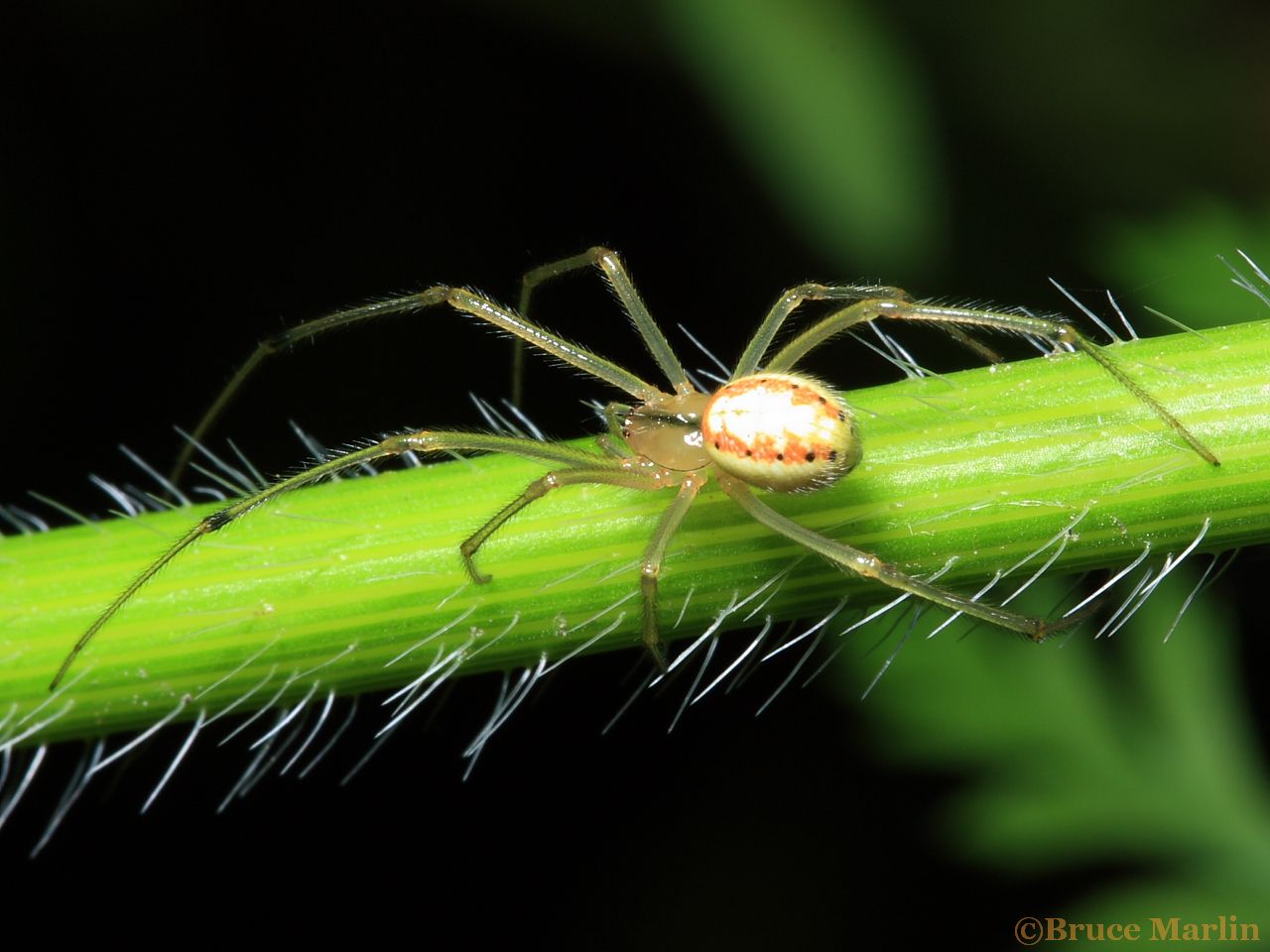
Male Marbled Orb Weaver Spider
Male Marbled Orbweaver
References
  1. Bugguide.net, "Male Lattice Orbweaver Araneus thaddeus"
  2. Bugguide.net, "Lattice orbweaver"
  3. The Kouroo Contexture, "People mentioned in (Henry David Thoreau's) 'The Maine Woods' "
  4. Archives, Gray Herbarium Library, Harvard University Herbaria, "Harris, Thaddeus William 1795-1856
Class Arachnida / Order Araneae: Spiders are the largest group of arachnids.  They are easily recognized by their eight legs, and there are few creatures great or small that elicit such irrational fear in mankind. The vast majority of spiders are completely harmless and offer beneficial services, chief of which is keeping the burgeoning insect population in check.  Spiders Index | House Spiders | Jumping Spiders
Custom Search

© Red Planet Inc.