American Elm - Ulmus americanus
Elm Family: Ulmaceae
Range: Europe / USDA Hardiness Zone: 3


American Elm

Once a very popular and long-lived (300+ years) shade and street tree, American Elm suffered a dramatic decline in the 1950's with the infestation of Dutch elm disease, a fungus spread by a bark beetle. The wood of American Elm is very hard and was a valuable timber tree used for lumber, furniture and veneer. The Indians once made canoes out of American Elm trunks, and early settlers would steam the wood so it could be bent to make barrels and wheel hoops. It was also used for the rockers on rocking chairs.

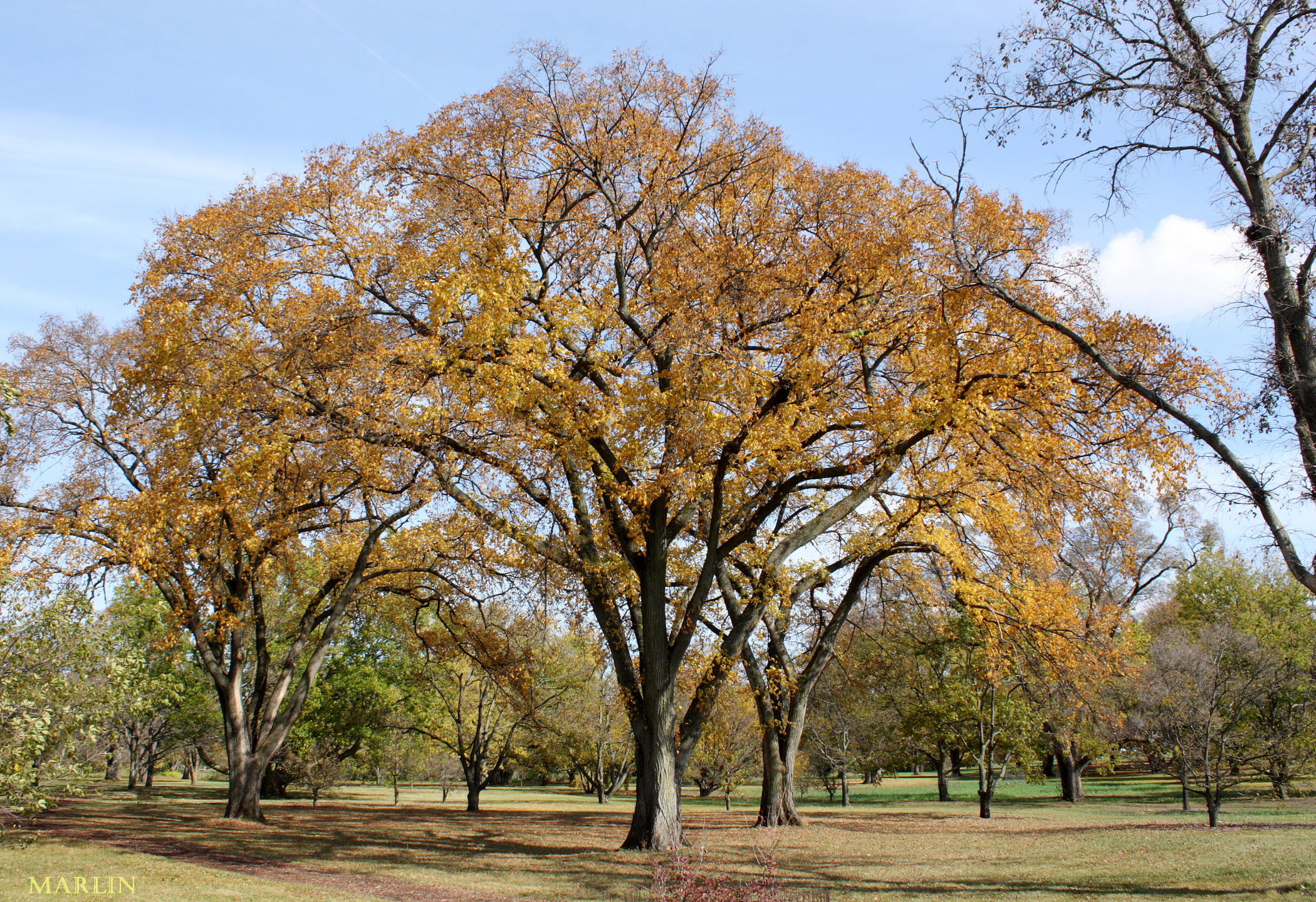
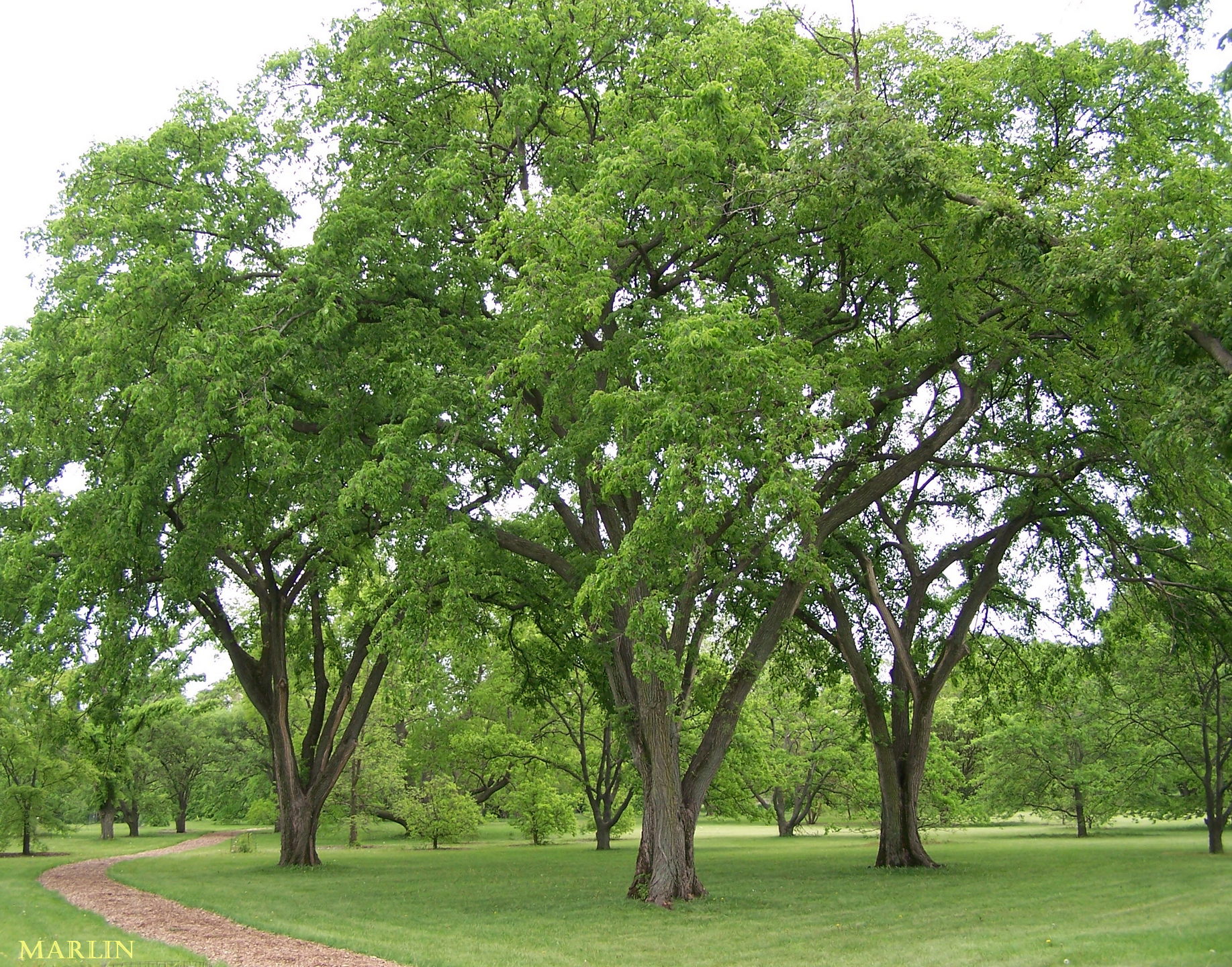
American Elms
Morton Arboretum accessions 604-25*1, 2 & 3, are from grafts done 83 years ago.

These three outstanding American Elms display the classic vase-shape of the species. The Morton Arboretum is one of the largest living Ulmus collections in the world (more than 30 species, in addition to numerous infraspecific taxa, hybrids, and cultivars) and has the source of numerous elm cultivars. I remember when the elms in Des Plaines, Illinois all died during the 1950's. Our walk to school along Thacker Street was shaded by enormous elms all the way from Wolf Road to 2nd Avenue, then the next year they were all gone. So sad. Similar scenarios are now playing themselves out amongst the lodgepole pine and ash trees of North America.

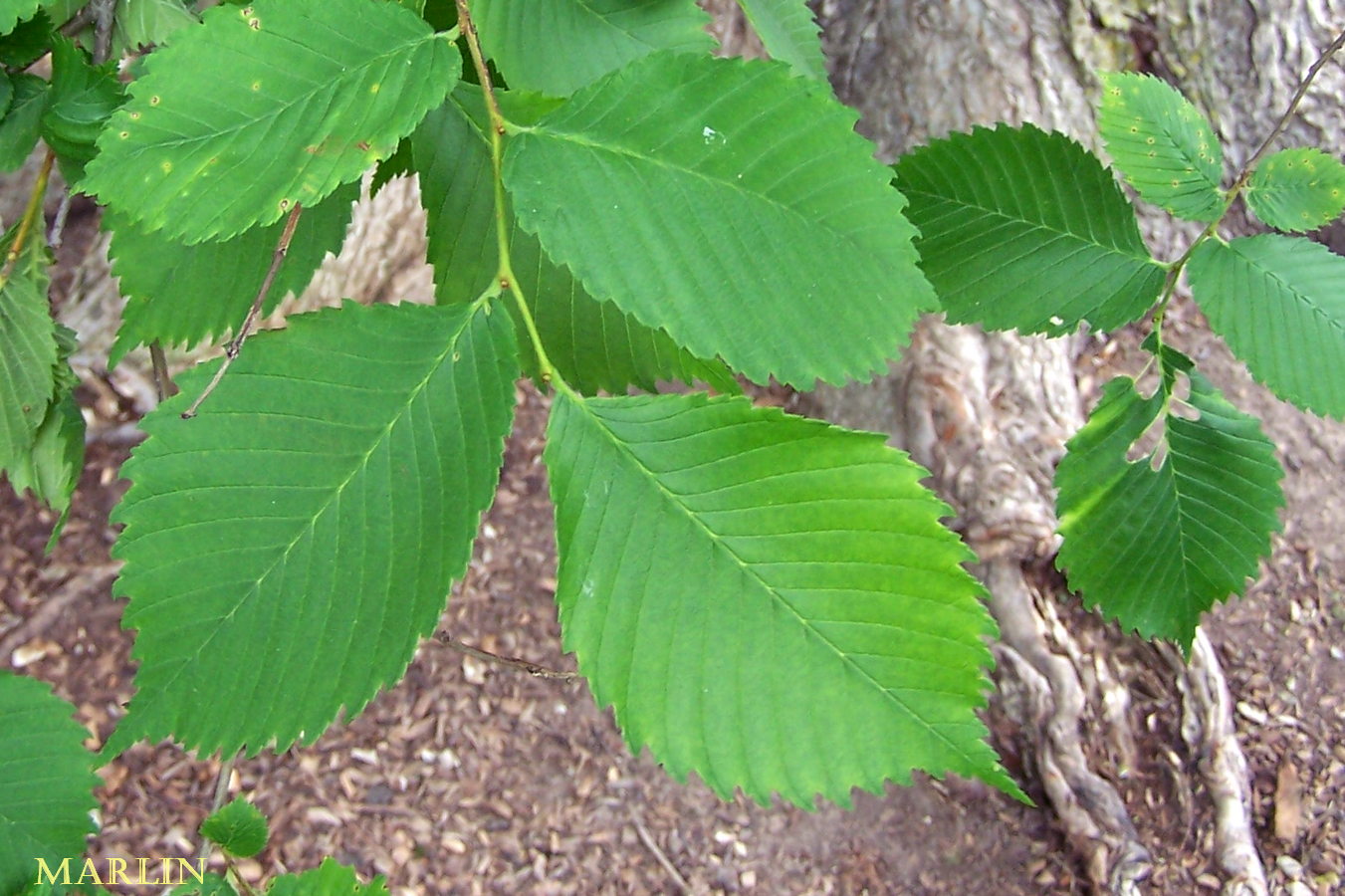
Leaf: alternate, simple, ovate to oblong, 3 to 5 inches long, 1 to 3 inches wide, margin coarsely and sharply doubly serrate, base conspicuously inequilateral, upper surface green and glabrous or slightly scabrous, paler and downy beneath.

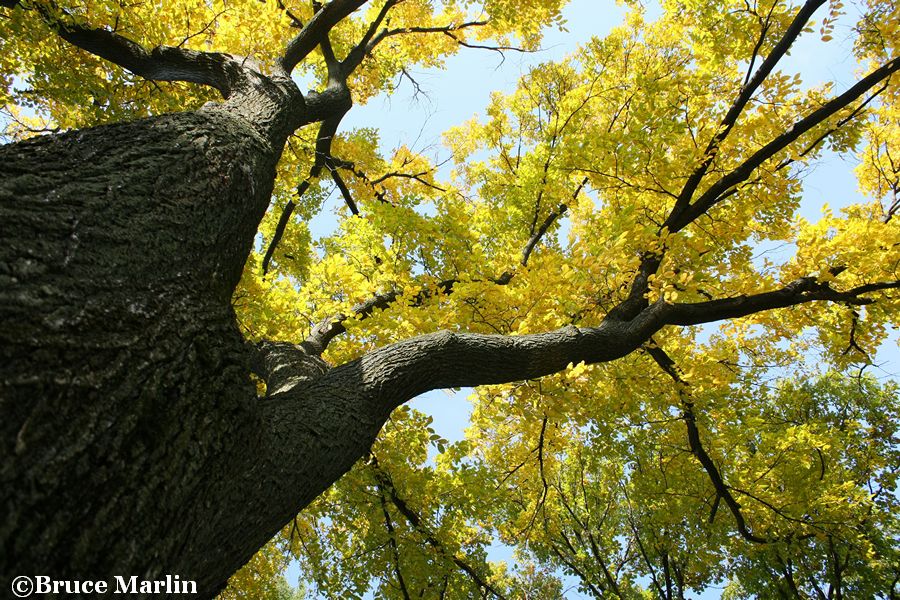
This native North American tree grows quickly when young, forming a broad or upright, vase-shaped silhouette, 80 to 100 feet high and 60 to 120 feet wide. Trunks on older trees could reach to seven feet across. The six-inch-long, deciduous leaves are dark green throughout the year, fading to yellow before dropping in fall. In early spring, before the new leaves unfold, the rather inconspicuous, small, green flowers appear on pendulous stalks. These blooms are followed by green, wafer-like seedpods which mature soon after flowering is finished and the seeds are quite popular with both birds and wildlife. Trees have an extensive but shallow root system.
Here is an interesting excerpt from a scientific paper regarding the decomposition rate of different tree leaves in an aquifer:

Abstract
Dry Chinquapin oak (Quercus macrocarpa) and American elm (Ulmus americana) leaves were placed in four microcosms fed by groundwater springs to monitor changes in dry mass, ash-free dry mass, and microbial activity over a 35-day period. Oxygen microelectrodes were used to measure microbial activity and to estimate millimeter-scale heterogeneity in that activity. Oak leaves lost mass more slowly than elm leaves. Generally, there was a decrease in total dry weight over the first 14 days, after which total dry weight began to increase. However, there were consistent decreases in ash-free dry mass over the entire incubation period, suggesting that the material remaining after initial leaf decomposition trapped inorganic particles. Microbial activity was higher on elm leaves than on oak leaves, with peak activity occurring at 6 and 27 days, respectively. The level of oxygen saturation on the bottom surface of an elm leaf ranged between 0 and 75% within a 30-mm2 area. This spatial heterogeneity in O2 saturation disappeared when the water velocity increased from 0 to 6 cm s-1. Our results suggest that as leaves enter the groundwater, they decompose and provide substrate for microorganisms. The rate of decomposition depends on leaf type, small-scale variations in microbial activity, water velocity, and the length of submersion time. During the initial stages of decomposition, anoxic microzones are formed that could potentially be important to the biogeochemistry of the otherwise oxic aquifer. (4)


Bark

Flower: Monoecious; small, in drooping clusters of 3 to 5, appear in early spring before leaf buds open.
Fruit: Rounded, flat, pappery, wafer-like samaras, 3/8 to 1/2 inch across, deeply notched at apex, hairless except for margin; ripen in spring.
Twig: Slender, glabrous, slightly zigzag, reddish brown; buds ovate, over 1/4 inch long, reddish brown with darker edged scales, often placed a little to one side of the twig.
Bark: Dark, ashy gray, flat-topped ridges separated by diamond-shaped fissures; outer bark when sectioned shows distinct, titleernating, buff colored and reddish brown patches. When young it is often quite spongy.
Form: In the open, the trunk is usually divided into several large, ascending and arching limbs, ending in a maze of graceful drooping branchlets.
--USDA Forest Service Silvics Manual


       web       www.cirrusimage.com
[Cirrus Home]    [Butterflies]    [Bugs]    [Beetles]    [Mantids]    [Spiders]    [Bees & Wasps]    [Dragon & Damselflies]    [Moths]   [Wildflowers]
[Fungi & Mushrooms]    [Flies]   [Butterflies of the World]  [Trees of North America]  [Cicadas & Grasshoppers]   [Ticks & Mites] 

 
© Red Planet Inc.