David Crabapple – Malus ‘David’
David Crabapple is 19 years old
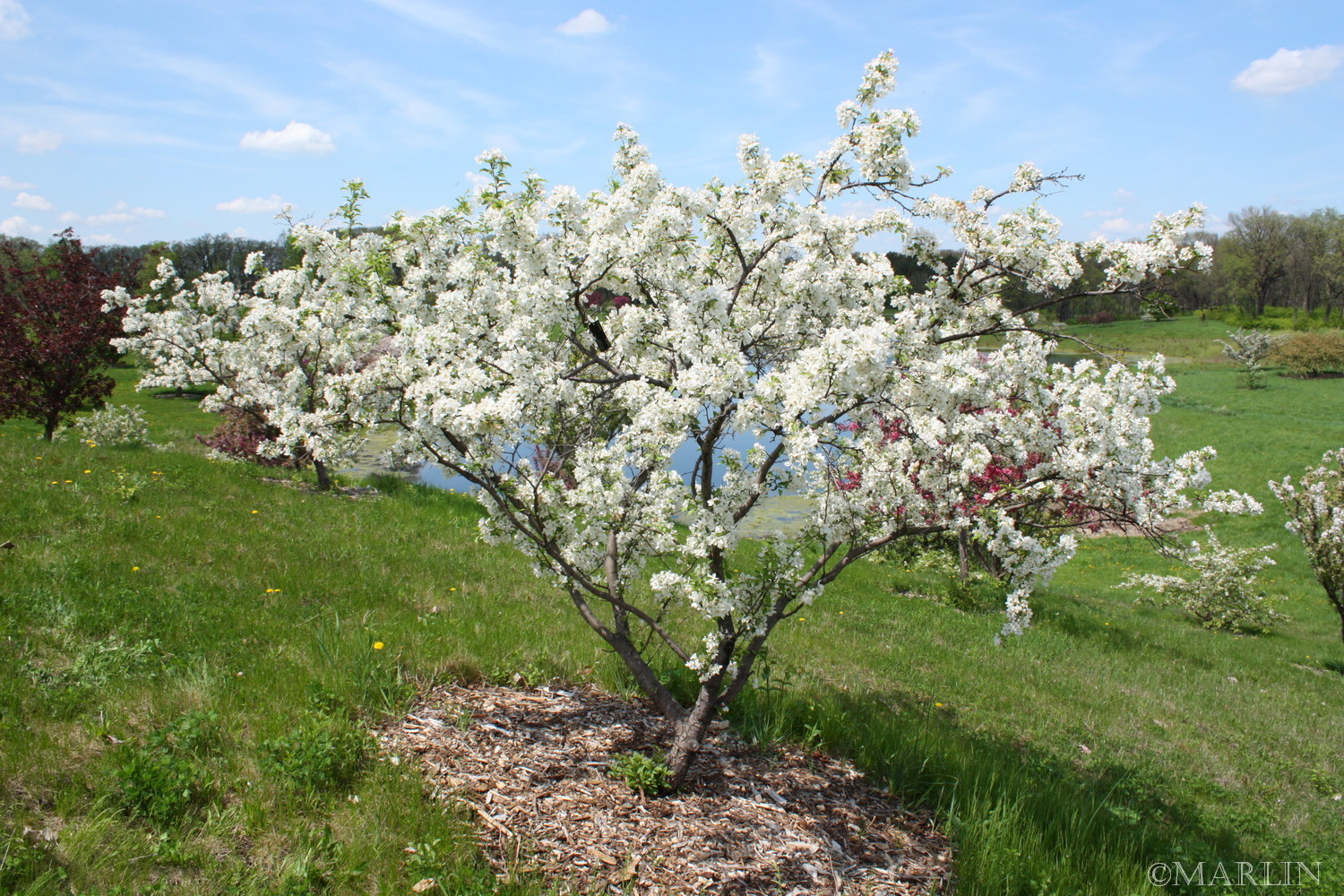
David Crabapple thrives in full sun and grows best in well drained, slightly acidic soils (pH 5.5-6.5); however, they will grow well in many soil types. Delicate pink buds give way to showy white, fragrant flowers. Its small stature and compact form makes David crab an attractive specimen planting for small areas, as well as accent plant groupings in large lawns.
There are about 55 different species in the genus Malus, and there are innumerable cultivars available in the landscape trade.
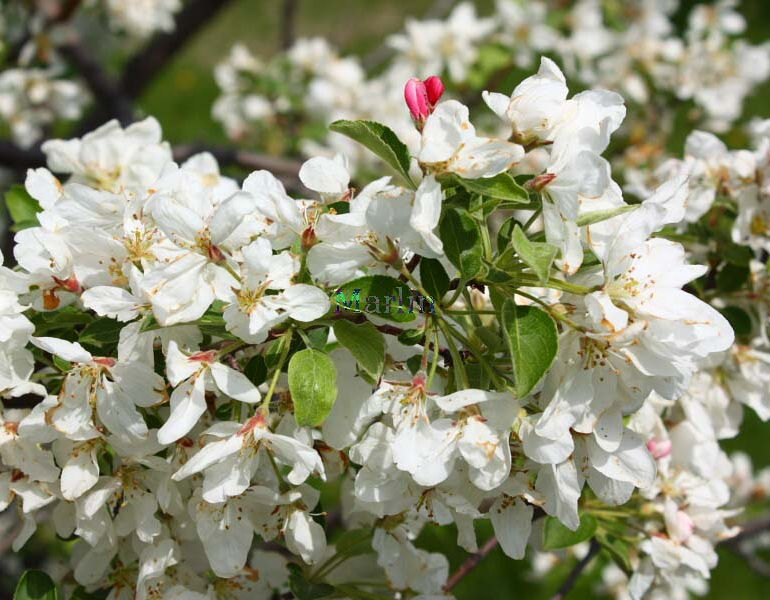
Pink buds open to white flowers, scarlet fruit, good to excellent disease resistance
USDA hardiness zones: 4 through 8A / Planting month for zone 7: year round / Planting month for zone 8: year round. Deciduous tree / Height: 10 to 15 feet / Spread: 15 to 20 feet. Plant habit: spreading / Growth rate: moderate
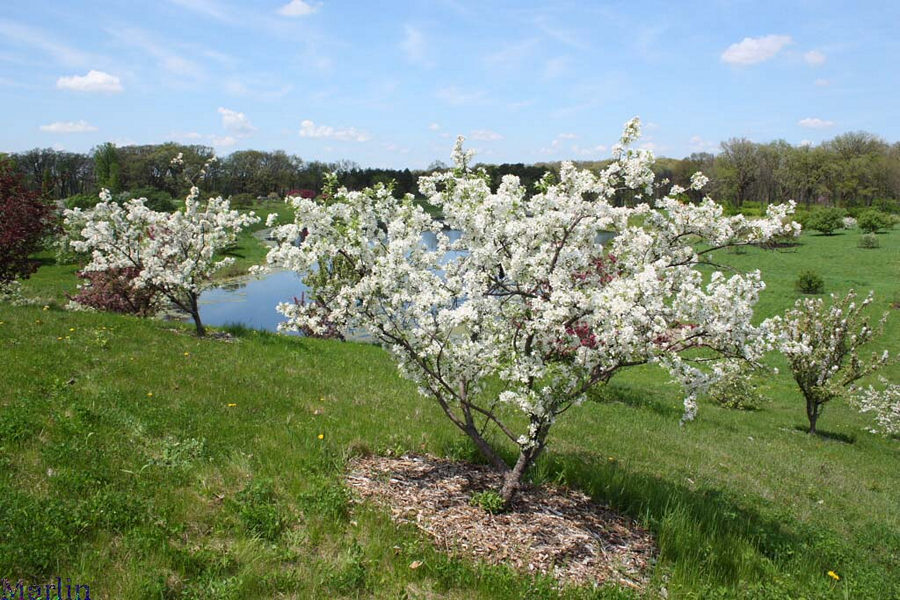
David Crabapple – Malus ‘David’, Morton Arboretum acc. 90-90*3 photos: Bruce Marlin
The Morton Arboretum’s Crabapple Collection was started in 1924. Part of this collection on the West Side participated in the National Crabapple Evaluation Program which evaluated new and disease-resistant varieties. As a result of the multi-year evaluation and additions, it has transformed into the West Side Malus collection which now contains 60 different kinds and over 140 specimens with highly desirable qualities.
I consider the crabapple collection at The Morton to be one of the most beautiful, colorful places on Earth during springtime. If you live anywhere near Chicago, you absolutely must see these trees in bloom. Yes, the cherry trees around the tidal basin in Washington D.C. are magnificent, but they are of only one variety and color (not to look a gift horse in the mouth), they can’t hold a candle to the riot of red, pink, purple, white and seemingly every shade in between. It’s good for the soul.
I would advise to consult the arboretum on blooming progress before planning your trip. With our recent warmest-ever March (2012), many trees bloomed 3-4 weeks earlier than usual. Of course, the crabs don’t all bloom at the same time, but there is enough overlap that if timed correctly, you can see 80% of the trees near their peak at one visit. –and don’t forget the flowering trees section on the west side!
Some of the specimens in this collection are almost large enough to be considered shade trees, while others are quite small. There is a great variety of shape as well, from wide to upright and narrow, weeping, and multi-stemmed. There is variety in flower color, ranging from white to pink, red, purple, and crimson. Some flower buds will be one color, and then open up to a completely different color! Fruits range in size from smaller than a pea, to nearly the size of most apples; they can be red, purple, orange, yellow, or green. Some of the smaller fruits persist on the tree throughout winter, providing a splash of color in the cold months.