European Beech – Fagus sylvatica
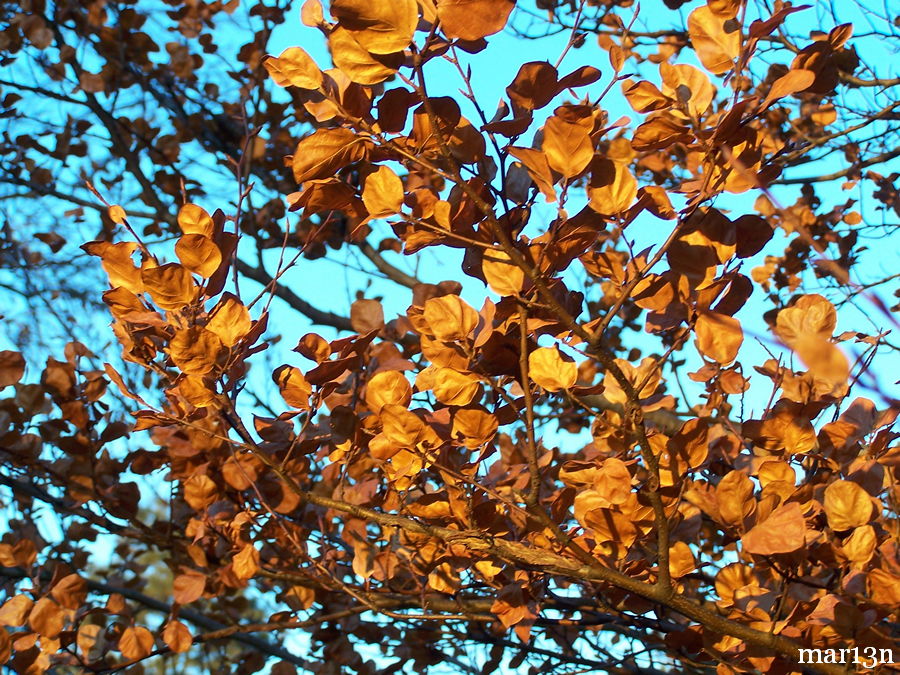
Late afternoon sun on midwinter beech foliage can be quite spectacular
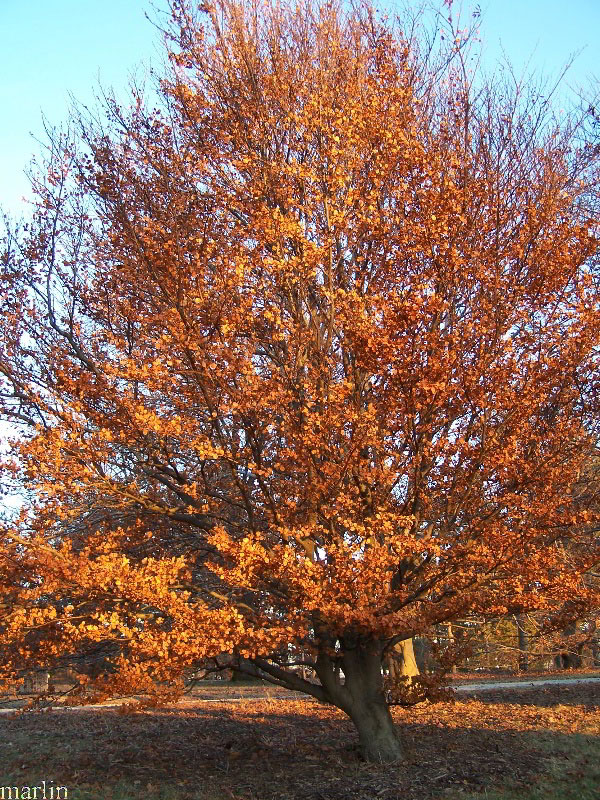
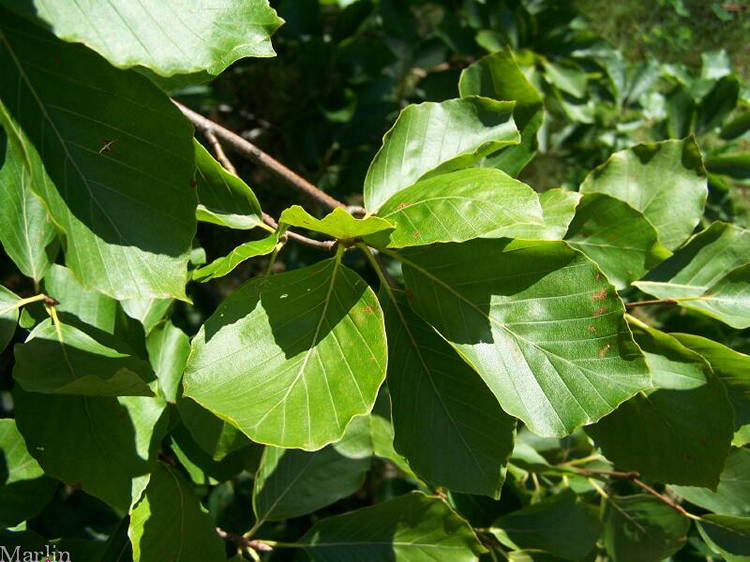
European Beech shows persistent midwinter foliage. Variation ‘Rotundifolia‘ [1].
The tree pictured above stands out like a blazing torch in an otherwise drab landscape.
European Beech is a large shade tree, maturing at about 60′ tall by 40′ wide. It has an upright oval growth habit. Beech liks full sun to partial sun but are tolerant of partial shade. They grow best rich moist, well-drained, slightly acidic soils.
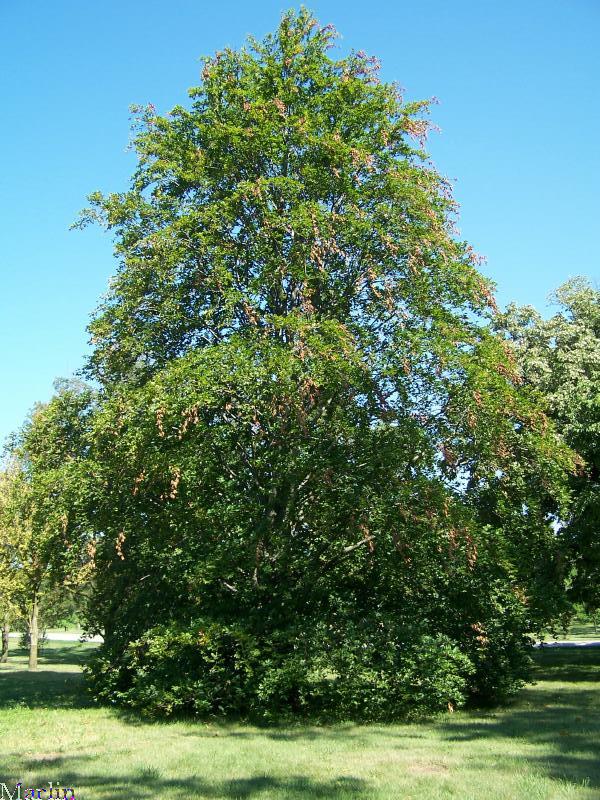
This European Beech specimen is 50 years old
Beech flowers appear in late April or early May when the leaves are about one-third grown; the species is monoecious. The flowers are quite vulnerable to spring frosts. Male flowers occur in long-stemmed heads; female flowers in clusters of two to four. Beechnuts require one growing season to mature and they ripen between September and November. Two or three nuts may be found within a single bur. Seed fall begins after the first heavy frosts have caused the burs to open.
The wood of the European Beech is used in the manufacture of numerous objects and implements. Its fine and short grain makes it an easy wood to work with, easy to soak, dye, varrnish and glue. Steaming makes the wood even easier to machine. It has an excellent finish and is resistant to compression and splitting. Milling is sometimes difficult due to cracking and it is stiff when flexed. It is particularly well suited for minor carpentry, particularly furniture. From chairs to parquetry (flooring) and staircases, the European Beech can do almost anything other than heavy structural support. Its hardness make it ideal for making wooden mallets and workbench tops.
Family Fagaceae: Oak, Beech & Chinkapin
There are about 900 species in this family worldwide, about 65 trees and 10 shrubs of which are native to North America. The oak genus Quercus contains about 600 species, including both deciduous and evergreen species. Although many exhibit the characteristic lobed leaves, some have serrated leaves while others may have a smooth margin. Tree Encyclopedia | Tree Index