Indian Magic Crabapple - Malus 'Indian Magic' [2]
Rose Family: Rosaceae
This cultivar is named for Donald Wyman, for thirty-five years Horticulturist of the Arnold Arboretum [4]
[Cirrus Home]   [Trees Graphics]   [Trees Table of Contents]   [Rosaceae Table of Contents]   [Rosaceae Graphics]
  Indian Magic Crabapple

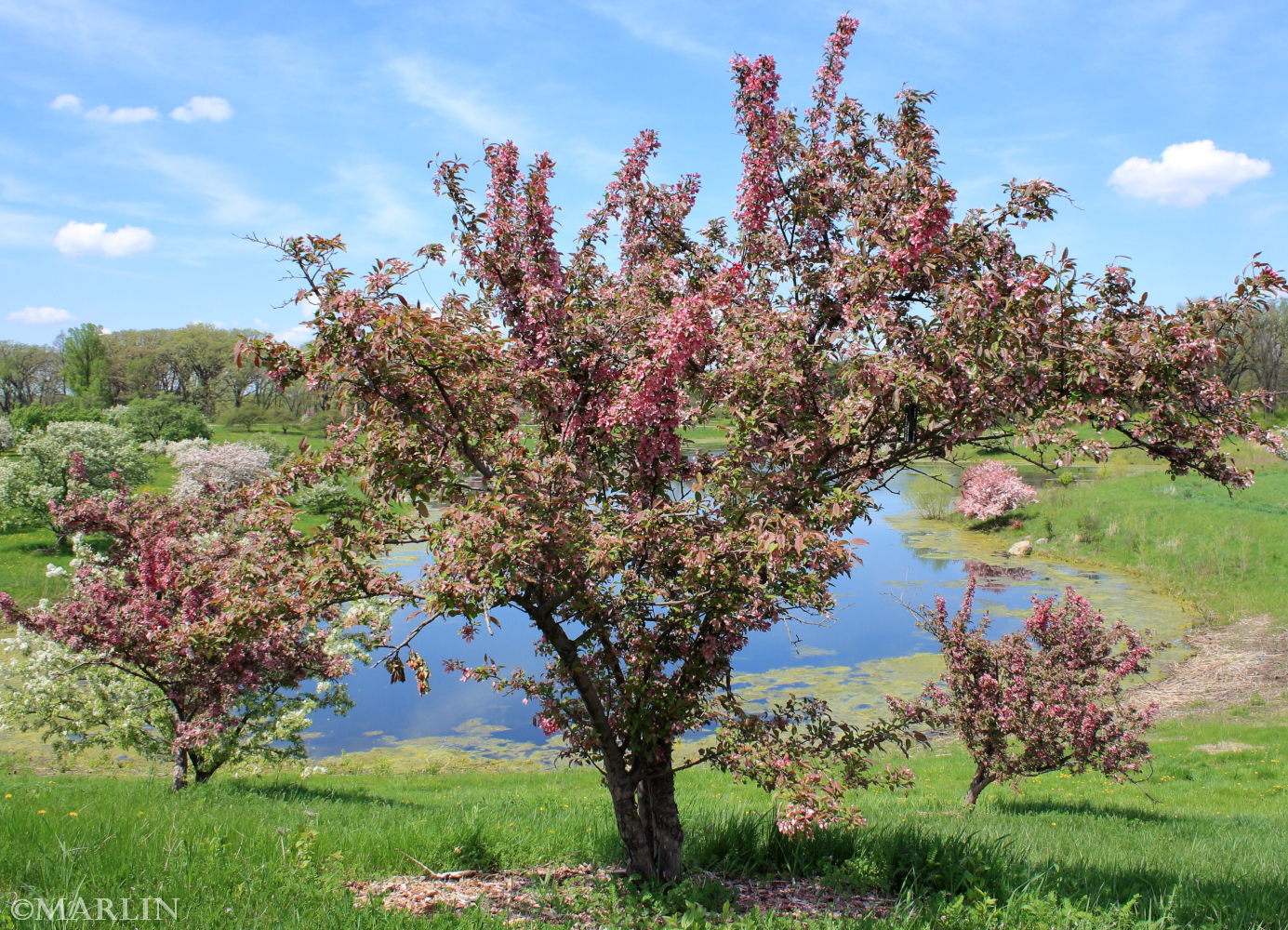
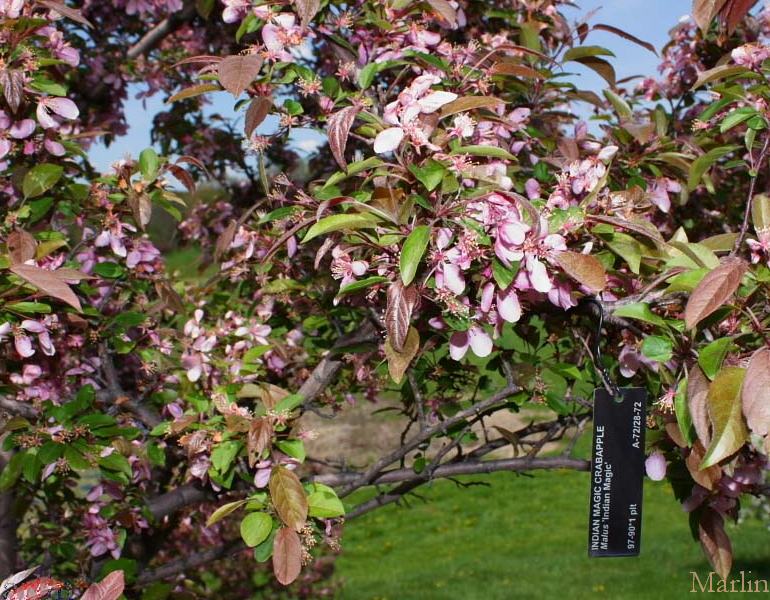
Indian Magic Crabapple (Malus Indian Magic) 15' tall/spread. Unlike a few of its infamous crabapple predecessors, Indian Magic truly has multi-season appeal. Rose-pink flowers in spring, handsome fall leaf color (reddish-orange), and a generous crop of small, bright red fruit that turn reddish-orange after the first few frosts of the season, make this tree a perennial favorite of visitors to the ISU collection. In addition, its low, spreading habit, gains it entry into landscapes with overhead power and communication lines. Birds will take the fruit of Indian Magic after they’ve softened in late fall or early winter.  [4]


USDA hardiness zones: 4 through 8A (Fig. 1)
Crabapples (Malus) are the most stunning of spring flowering trees for Midwest landscapes and are a great choice for the home garden. Many of them are small in stature and can maintain visual interest throughout the changing seasons (spring flowers, fall fruit, textured bark and craggy branches in winter).

There are about 55 different species in the genus Malus, and there are innumerable cultivars available in the landscape trade. The Arboretum's Crabapple Collection was started in 1924. Part of this collection on the West Side participated in the National Crabapple Evaluation Program which evaluated new and disease-resistant varieties. As a result of the multi-year evaluation and additions, it has transformed into the West Side Malus collection which now contains 60 different kinds and over 140 specimens with highly desirable qualities. 

Some of the specimens in this collection are almost large enough to be considered shade trees, while others are quite small. There is a great variety of shape as well, from wide to upright and narrow, weeping, and multi-stemmed. There is variety in flower color, ranging from white to pink, red, purple, and crimson. Some flower buds will be one color, and then open up to a completely different color! Fruits range in size from smaller than a pea, to nearly the size of most apples; they can be red, purple, orange, yellow, or green. Some of the smaller fruits persist on the tree throughout winter, providing a splash of color in the cold months. [1]

Indian Magic Crabapple
Indian Magic Crabapple Triumvirate - Malus 'Indian Magic', Morton Arboretum acc. 97-90*1, 2 & 3  [2] May 8th, near Chicago.

Crabapples are versatile, small, ornamental trees used in the urban landscape. Crabapples bloom in spring, usually in May, bearing flowers that vary a great deal in color, size, fragrance, and visual appeal. It is common for flower buds to be red, opening to pink or white flowers. The fruit ripens between July and November, and varies in size from ¼”to 2” long or wide. Crabapples thrive in full sun and grow best in well drained, slightly acidic soils (pH 5.5-6.5); however, they will grow well in many soil types. Most crabapple selections tolerate the cold winters and hot, dry summers prevalent in the Midwest.

For many years, crabapple cultivars have been selected on the basis of their flowers, but with some cultivars, undesirable features, such as disease problems and early fruit drop, outweigh their short-lived spring beauty. No single cultivar can fulfill every landscaping need.   [3]


 Tree Hardiness Zone Map

Fig. 1
Hardiness zone map courtesy the Arbor Day Foundation*

DISEASE
Disease resistance should be your first consideration. Many resistant cultivars are available and recommended in order to avoid the most common disease problems. Before making a selection, keep in mind that not all crabapples do well in every location. Disease intensity varies from region to region, and disease strength can vary from year to year. For instance, some crabapples will be more prone to disease susceptibility in areas with greater rainfall than in drier climates. Careful consideration of the following information will be helpful in choosing the right crabapple cultivar.
 

There are four diseases that seriously affect crabapple:
Apple scab is one of the most serious diseases from an aesthetic standpoint, but usually not a serious threat to the health of the tree. It is a fungal disease, which develops in cool, wet springs. On susceptible crabapples, apple scab causes spotting of the leaves, premature defoliation, and unsightly spots on the fruit. There are numerous cultivars that are resistant or very tolerant (still susceptible but with little defoliation) so choose one based on its resistance.
Cedara-apple rust is a less serious leaf-spotting disease common to our native crabapple cultivars. It is usually a problem in areas where native junipers (Juniperus) are planted. Selecting resistant cultivars can control this disease.

Powdery mildew is a fungal disease that can cause considerable damage to leaves and fruit of susceptible cultivars without threatening the health of the tree. Poor air circulation, close association with susceptible apple cultivars, and wet, humid weather conditions will greatly influence disease incidence and severity. Fire blight is a serious bacterial disease of crabapples. Though it is less common then the others, if left untreated it can be fatal to susceptible crabapple cultivars. Select resistant cultivars.  [3]

Please visit some of our other tree species and families:


Hickory
 Carya sp.

Umbrella Black Locust
Robinia pseudoacacia
Japanese Horse Chestnut - Aesculus turbinata
Japanese Horse Chestnut
Aesculus turbinata

Tulip-Tree
Liriodendron tulipifera
References
  1. Morton Arboretum, Crabapple: A Tree For All Seasons
  2. Indian Magic Crabapple - Malus 'Indian Magic', Morton Arboretum acc. 97-90*1, 2 & 3, photographed May 8th, 2009. Photographer: Bruce J. Marlin
  3. Morton Arboretum, Crabapples for the Home Landscape
  4. Singingwings.rohaircom, Indian Magic
Excerpts from Morton Arboretum articles used with permission.


Dolgo CrabappleSelkirk Crabapple - Malus 'Sekirk'Pink Spires Crabapple - Malus 'Pink Spires'Purple Prince Crabapple - Malus 'Purple Prince'Mary Potter Crabapple - Malus 'Mary Potter'American Masterpiece™ Crabapple - Malus 'Amaszam'Klehm Prairie Crabapple - Malus ioensis 'Klehmii'Christmas Holly Crabapple - Malus 'Chrishozam'Dusky Pear - Pyrus phaeocarpa