![]() | Siberian Crabapple - Malus baccata [2] Pronunciation: MAY-lus back-AY-tuh. Rose Family: Rosaceae [Cirrus Home] [Trees Graphics] [Trees Table of Contents] [Rosaceae Table of Contents] [Rosaceae Graphics] |
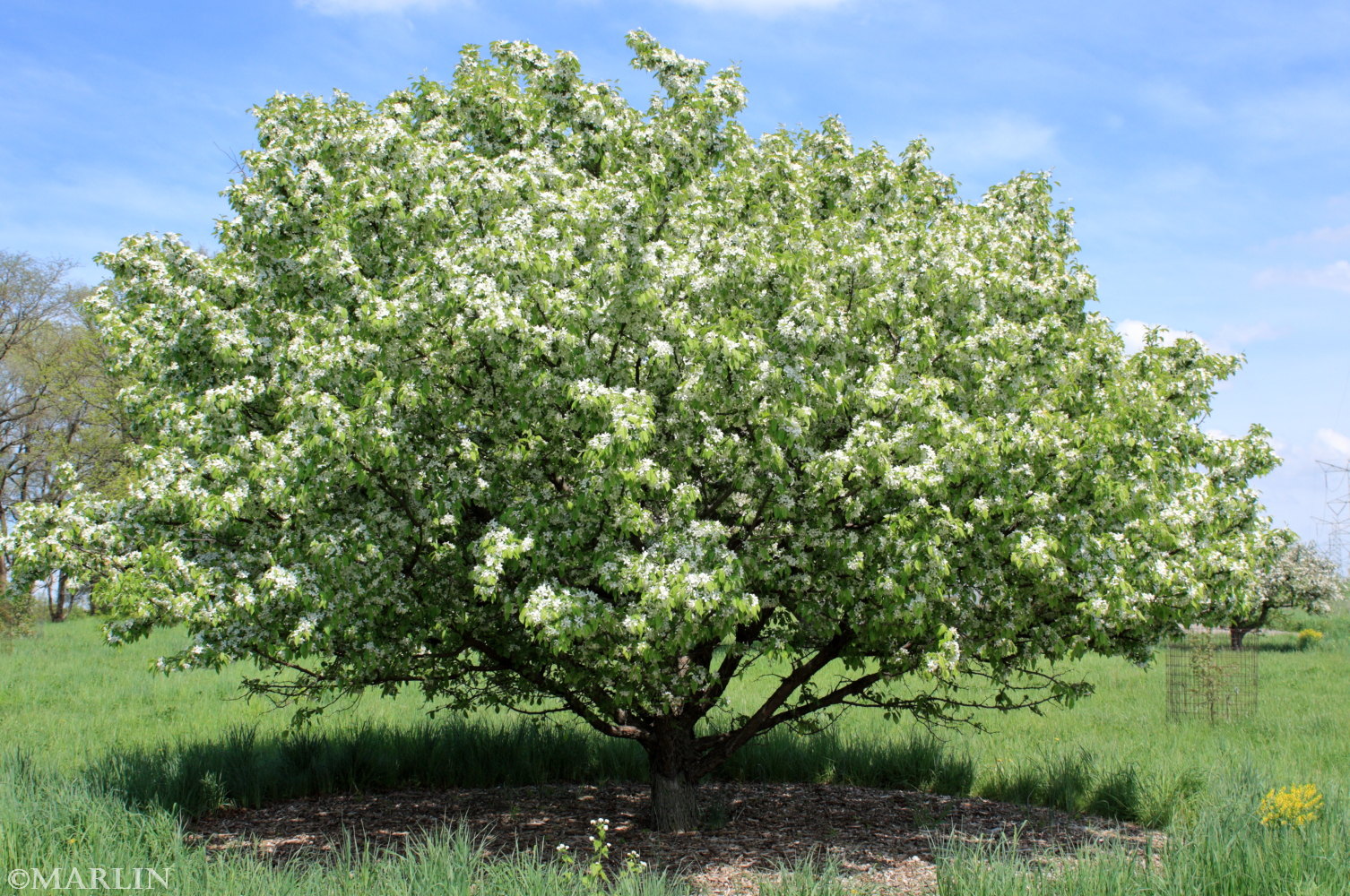
Siberian crab blooming May 8th, near Chicago. The tree is hardy in zones 2-7 * |
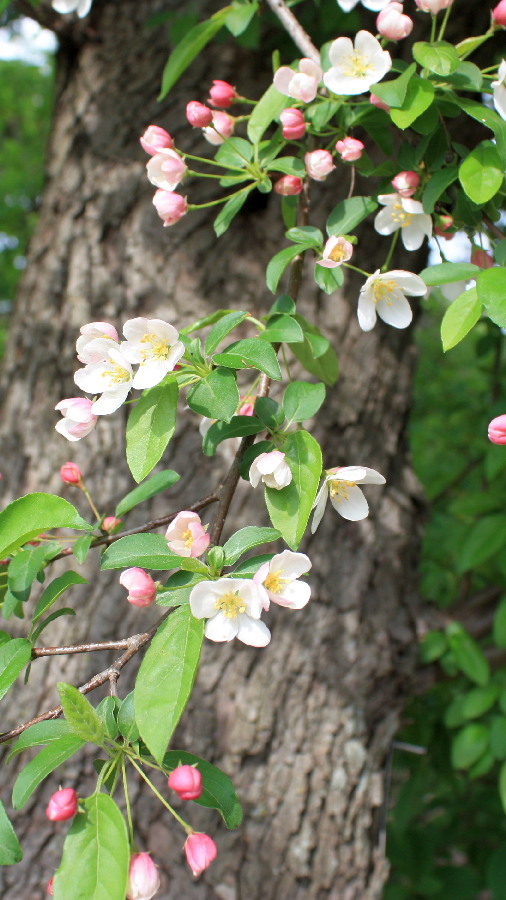
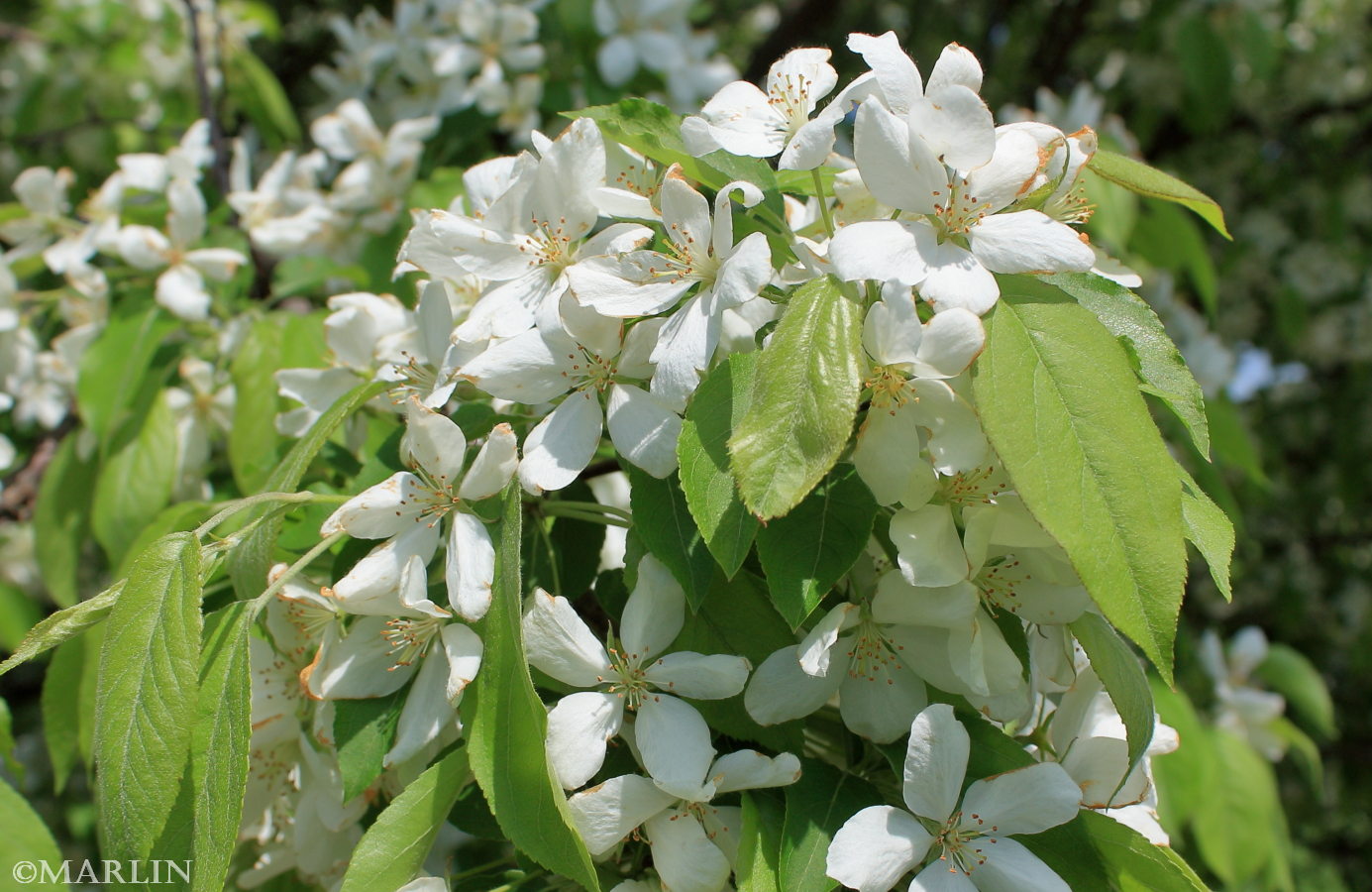
One of the many selections of flowering Crabapple, Siberian Crabapple is a deciduous tree with a rounded canopy of spreading branches, ultimately reaching 20 to 50 feet in height (Fig. 1). The very fragrant blooms appear in great abundance, and the single, 1.5-inch-diameter flowers are pink when in bud but open up to white. The blooms are followed in fall by long-lasting, bright red or yellow fruits which are very popular with the birds or can be used to make a delicious jelly. Some selections make a mess of a walk or driveway as the fruit falls in the fall and winter. [5] Siberian Crab is native to: DESCRIPTION
Foliage |
| Crabapples are versatile, small, ornamental trees used in the urban landscape. Crabapples bloom in spring, usually in May, bearing flowers that vary a great deal in color, size, fragrance, and visual appeal. It is common for flower buds to be red, opening to pink or white flowers. The fruit ripens between July and November, and varies in size from ¼”to 2” long or wide. Crabapples thrive in full sun and grow best in well drained, slightly acidic soils (pH 5.5-6.5); however, they will grow well in many soil types. Most crabapple selections tolerate the cold winters and hot, dry summers prevalent in the Midwest. For many years, crabapple cultivars have been selected on the basis of their flowers, but with some cultivars, undesirable features, such as disease problems and early fruit drop, outweigh their short-lived spring beauty. No single cultivar can fulfill every landscaping need. Consider the following information when choosing a crabapple cultivar for your landscape. [3] DISEASE |
Please visit some of our other tree species and families: | |||
![]() Hickory Carya sp. | ![]() Umbrella Black Locust Robinia pseudoacacia | ![]() Japanese Horse Chestnut Aesculus turbinata | Tulip-Tree Liriodendron tulipifera |
References
Excerpts from Morton Arboretum articles used with permission. |
![]() | ![]() | ![]() | ![]() | ![]() | ![]() | ![]() |
Custom Search |
|
[Cirrus Home] [Tree Encyclopedia] [Trees Alphabetic Table of Contents] [Family Rosaceae Table of Contents] |
| © Cirrus Digital / All Rights Reserved |