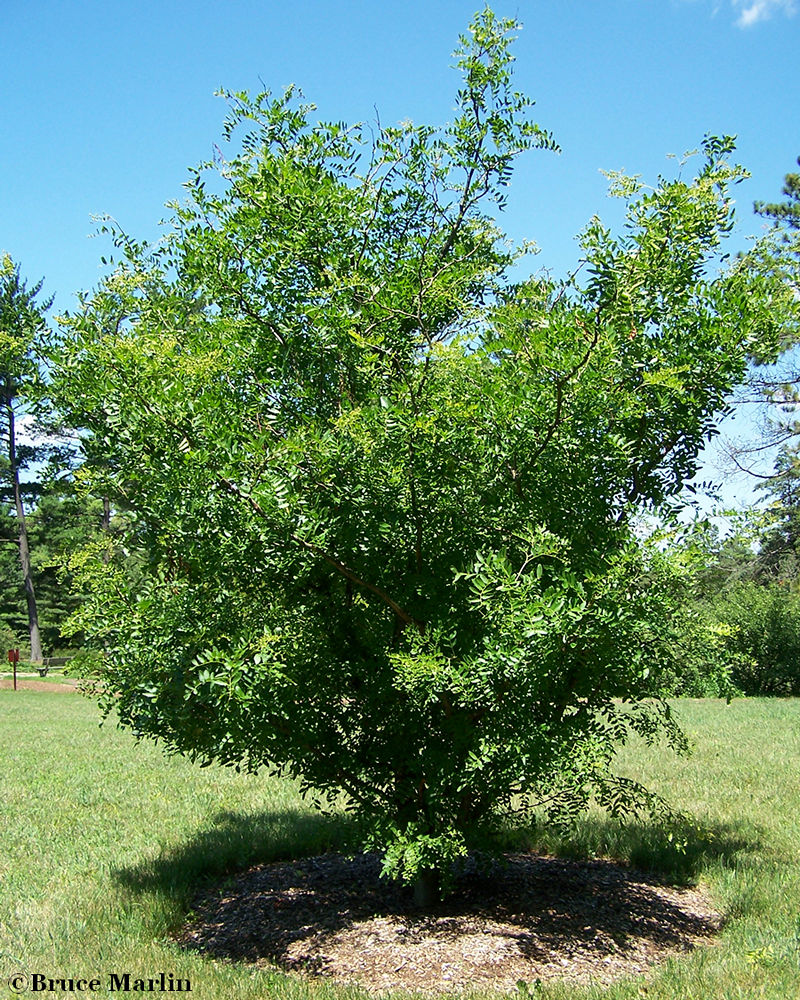
Gleditsia caspica - Caspian Locust Tree
Family: Fabaceae (title. Leguminosae) subfamily: Caesalpinioideae tribe: Caesalpinieae. Also placed in: Caesalpiniaceae
Native to Asia, temperate: Western Asia, Iran, Caucasus: Azerbaijan, Caspian Sea region


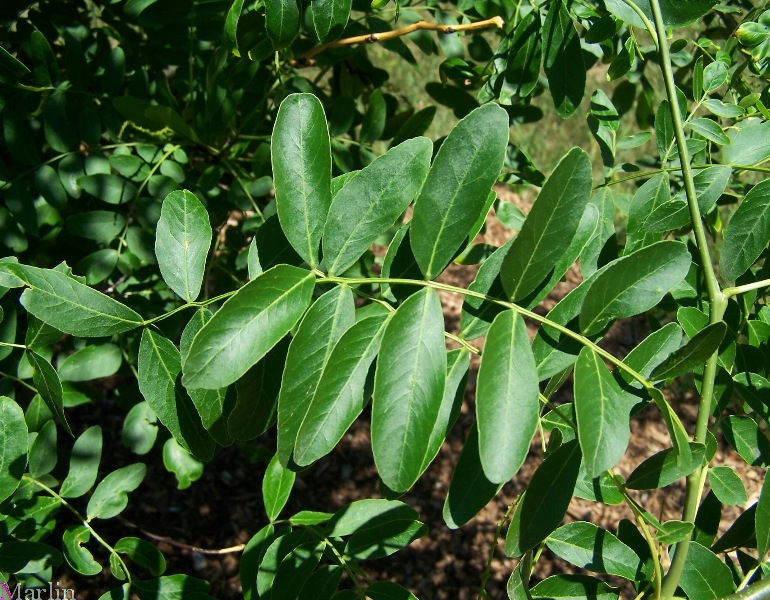
Caspian Locust leaflets are 1-1/2 to 2 inches long, large for a locust species

The Fabaceae are herbs, vines, shrubs, trees, and lianas found in both temperate and tropical areas. They comprise one of the largest families of flowering plants, numbering 630 genera and 18,000 species. The leaves are stipulate, nearly always alternate, and range from bipinnately or palmately compound to simple. The petiole base is commonly enlarged into a pulvinus that commonly functions in orientation of the leaves (sometimes very responsively, as in the sensitive plant, Mimosa pudica). The flowers are usually bisexual, actinomorphic to zygomorphic, slightly to strongly perigynous, and commonly in racemes, spikes, or heads. The perianth commonly consists of a calyx and corolla of 5 segments each. The androecium consists of commonly 1- many stamens (most commonly 10), distinct or variously united, sometimes some of them reduced to staminodes. The pistil is simple, often stipitate, comprising a single style and stigma, and a superior ovary with one locule containing 2-many marginal ovules. The fruit is usually a legume, sometimes a samara, loment, follicle, indehiscent pod, achene, drupe, or berry. The seeds often have a hard coat with hourglass-shaped cells, and sometimes bear a u-shaped line called a pleurogram.

The native thorny locust species is found on both sides of the Mississippi River from Nebraska to Texas and from Pennsylvania to Alabama. Fence rows and pastures are common locations.


This Caspian Locust tree was started from a cutting 16 years ago.

Summer: The pinnately compound leaves (one large stem with many small leaflets) allow filtered sunlight, making an attractive canopy that is practical for growing grass or other plants below.
Fall: Color in the fall is variable but is usually a shade of yellow and can be very nice. The large seedpods ripen and become a maintenance consideration for most of the fall and winter months. Wildlife cherishes the sweet pods from which the tree gets its name. The thorny specimen (Gleditsia triacanthos) from which this variety arose is one of the thorniest trees found. Thorns can protrude directly from the trunk and be a foot or more in length. Crews have been busy two decades at the University of Illinois at Urbana-Champaign taking down diseased honeylocust trees that were once planted to replace the declining American elms.

The native thorny locust species is found in Illinois, on either side of the Mississippi River from Nebraska to Texas and from Pennsylvania to Alabama. Fence rows and pastures are common locations.


Being a member of the bean family, the Caspian Locust is related to the Kentucky Coffee Tree, and the vine Wisteria, among others.

Healthy, attractive trees add interest, pleasure, and value to landscapes. Some factors to keep in mind as you select a tree relate to your projected planting site and some factors relate to you. Healthy plants, growing under conditions that suit them, are marvelously engineered to deal with minor incidence of heat, cold, drought, storm damage, pests, and disease. Sometimes we unknowingly stress them, reducing their ability to stay healthy.

Trees provide cover: Birds and small animals need concealed places for nesting and hiding from predators. The presence of wildlife can make your backyard or woodlot a special place for your family and children. As urban sprawl displaces many birds and animals from their natural habitat, it becomes even more important for home and landowners to provide green space and mini-sanctuaries for birds and other wildlife.

Trees provide food: Having a wide variety of trees that provide seeds, nuts and fruit for wildlife to eat is one way to increase your success in attracting wildlife. although artificial bird feeders can supplement naturally occurring foods, they can attract unwanted pests such as pigeons, Canada geese, squirrels, and even rats. Trees also provide food by attracting insects and providing cover for their activities; mating, egg-laying. Insects form a huge portion of the warm-weather food supply for many species of songbirds.

And, most important in this age of man-made global warming, trees sequester large amounts of carbon dioxide.