
Hornbeam Maple – Acer carpinifolium
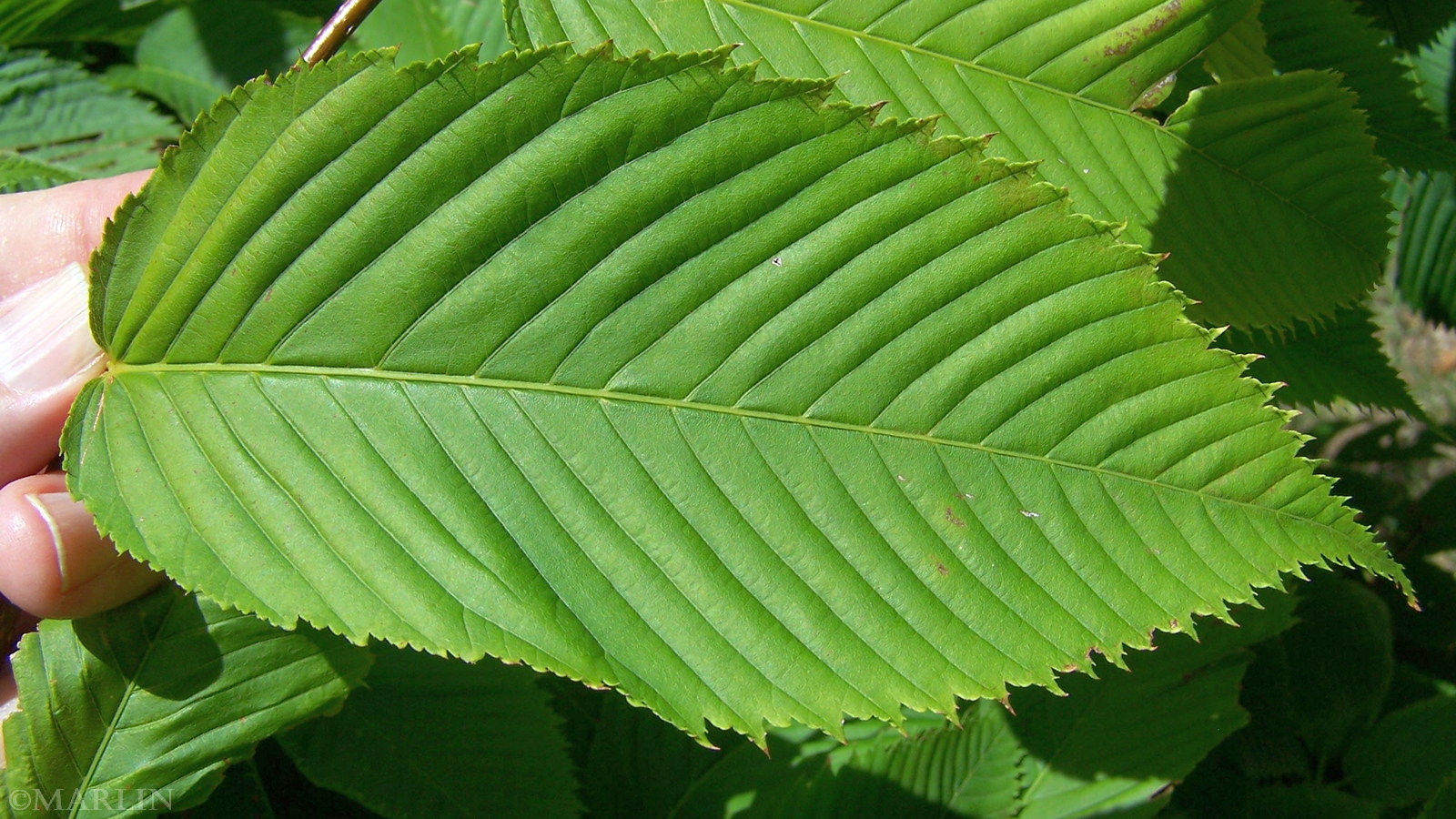
The leaf of hornbeam maple is atypical for the family
Native to China, the hornbeam maple is a small deciduous tree, growing to 20 feet or less.
An excellent small ornamental tree for a small area or to add structure to a mixed perennial garden. Best suited as an addition to an established garden where filtered sun and wind protection already exist. Not commonly found in the nursery trade.
Compare to below: American hornbeam (Birch family)
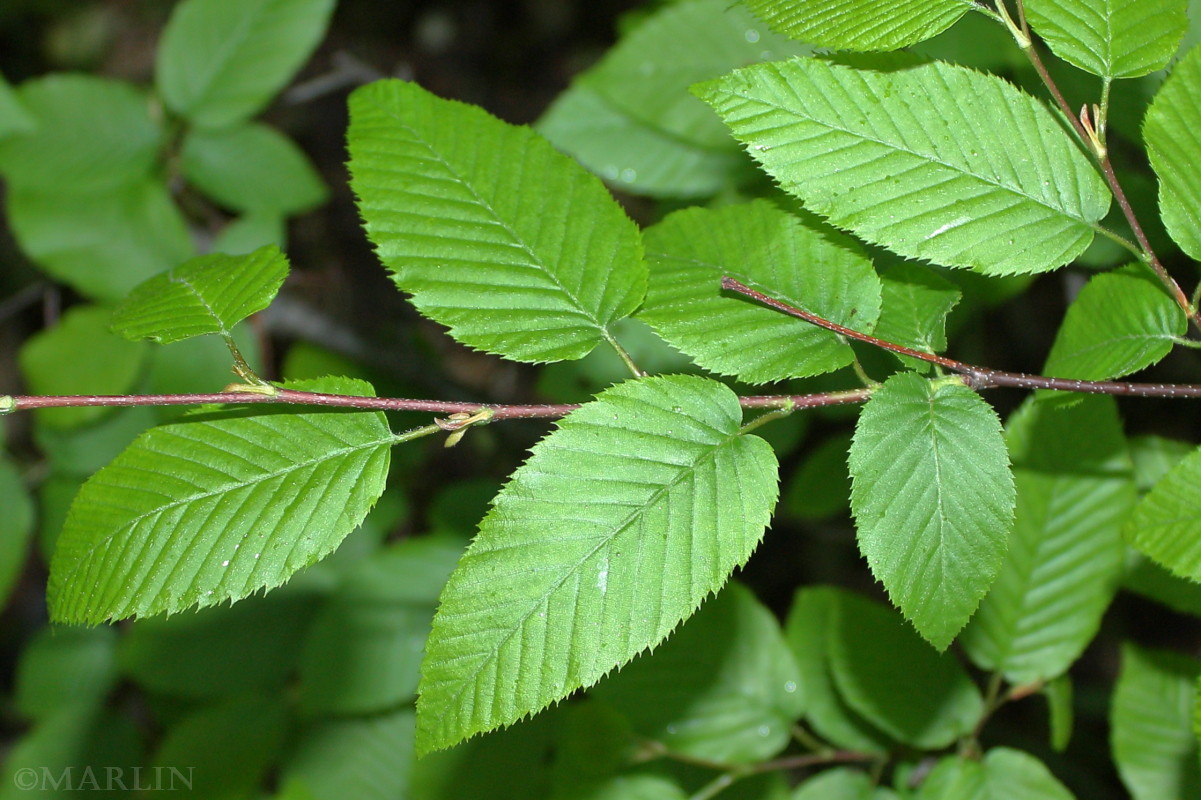
Leaflets are opposite in maples, alternate in hornbeams
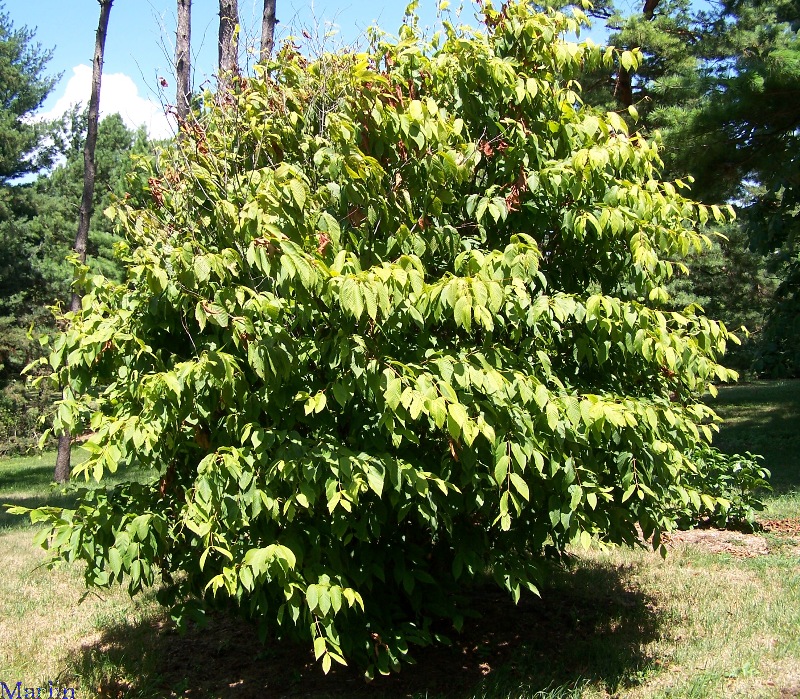 This specimen is scarcely 10 feet tall: it is 46 years old
References:
1. Acer grosseri, Morton Arboretum accession, photographed October 19, 2009 by Bruce Marlin
2. eFloras.org, Flora of China, “Acer davidii subsp. grosseri (Pax) P. C. de Jong in van Gelderen et al.”
3. Michigan State University Extension, “Acer grosseri–Snake-skin Maple”
4. USDA, ARS, GRIN, Taxon: “Acer grosseri Pax”
Family Aceraceae – Maples
The Maples are some of our most familiar and beloved trees. Most are native to the far east: China, Japan, Korea, Manchuria. Maples produce a distinctive winged fruit called a samara, also commonly known as helicopters or whirlybirds. Tree Encyclopedia | Tree Index | Maple Index | Elms & Zelkovas