
 |
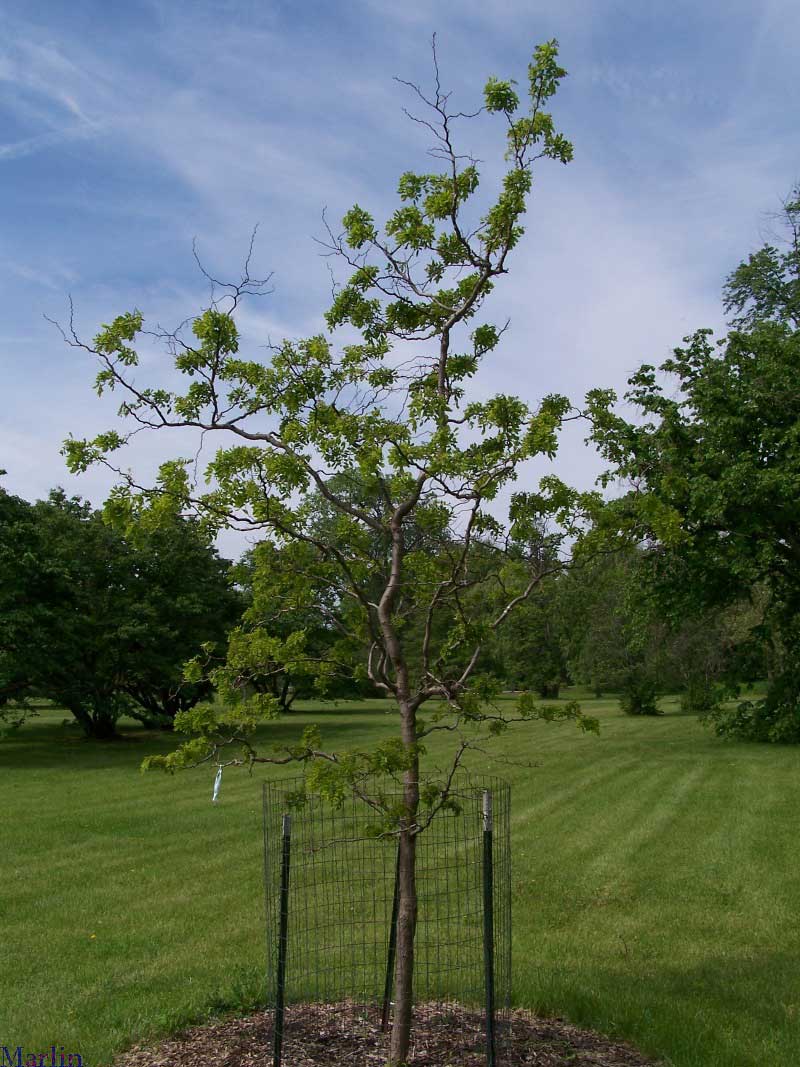
Twisty Babyâ„¢ Black Locust Family: Fabaceae (Leguminosae) USDA Hardiness Zone: 3. Live specimens photo- graphed at The Morton Arboretum at Lisle, Illinois |

Custom Search
|
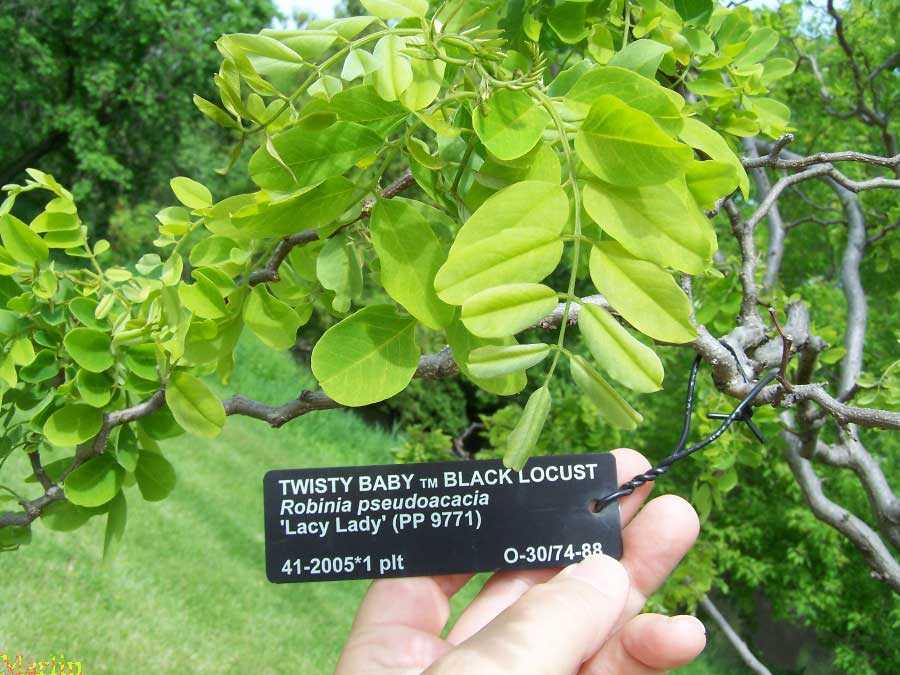 Robinia pseudoacacia 'Lacy Lady' |
|
Black locust grows naturally on a wide range of sites but does best on rich moist limestone soils. It has escaped cultivation and become naturalized throughout eastern North America and parts of the West. Black locust is not a commercial timber species but is useful for many other purposes. Because it is a nitrogen fixer and has rapid juvenile growth, it is widely planted as an ornamental, for shelterbelts, and for land reclamation. It is suitable for fuelwood and pulp and provides cover for wildlife, browse for deer, and cavities for birds.
Black locust has a disjunct original range, the extent of which is not accurately known. The eastern section is centered in the Appalachian Mountains and ranges from central Pennsylvania and southern Ohio, south to northeastern Alabama, northern Georgia, and northwestern South Carolina. The western section includes the Ozark Plateau of southern Missouri, northern Arkansas, and northeastern Oklahoma, and the Ouachita Mountains of central Arkansas and southeastern Oklahoma. Outlying populations appear in southern Indiana and Illinois, Kentucky, Alabama, and Georgia. Black locust has been planted widely and has become naturalized throughout the United States, southern Canada, and parts of Europe and Asia. |
|
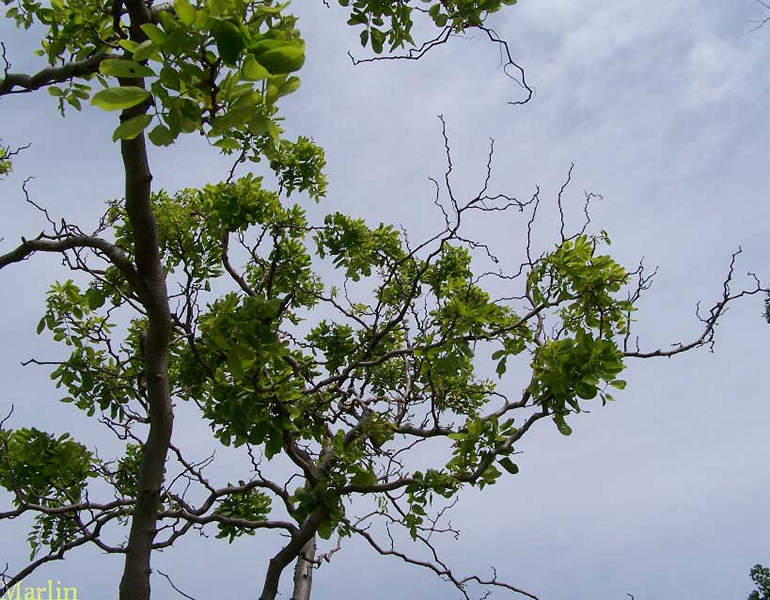
'Twisty Baby' is a horticultural selection, propagated by grafting, with contorted branches and leaves. What makes the tree especially appealling is the tightly growing leaf clusters that hang down, very much like wisteria blooms. Because black locusts produce new terminal growth all summer long, until leaf fall in autumn, the growing tips are always a fresh apple green color; the leaflets curl up, showing a greyish underside, and the mature leaves a deep, bluish green. The lovely multi-tone effect thus created lasts the entire summer. In winter, the twisted branches have great character as well.
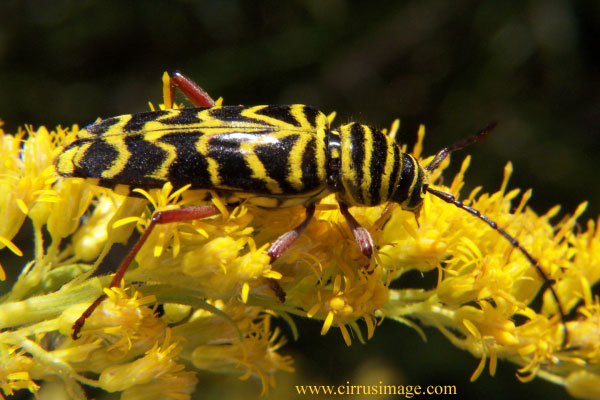
The leading branches of this fast grower (45 cm per year, though some of the growth is downward) can be trained easily by the artistic gardener to a shape that will emphasize their contorted nature, especially when grown as a multi-stemmed specimen. It can reach a height exceeding 3 m, spreading almost as much. Black locusts bloom on mature trees, but 'Twisty Baby' does not bloom reliably. When it does, it produces hanging clusters of white, pea-like blooms with a sweet fragrance; understated, yet spectacular. Damaging Agents- Black locust is severely damaged by insects and disease, probably more than any other eastern hardwood species. Ubiquitous attacks by the locust borer (Megacyllene robiniae) and by the heart rot fungi Phellinus rimosus or Polyporus robiniophilus make growing black locust for timber production impractical. Locust borer larvae construct feeding tunnels throughout the wood, and the holes serve as entry points for heart rot fungi that cause extensive wood decay. Locust borer attacks can begin at a young age and damage can be so extensive that trees are not suitable for fence posts. Many plantations planted in reclamation projects were seriously damaged, but more trees could be used if cut as soon as they reach post or mine-prop size. Slow-growing trees on poor sites are most susceptible to borer attack. On sites where tree vigor is low, repeated attacks often reduce black locust to sprout clumps. Damage to the sprouts is often as severe as in the original stem.
Outbreaks of the locust leafminer (Odontota dorsalis) occur almost yearly. Black locust trees throughout an entire region are often defoliated, and during years of low rainfall many are killed. Attacks by the locust twig borer (Ecdytolopha insiticiana) occur over a wide area and in heavily infested areas seedling mortality may be high. Black locust is attacked by a wide variety of other insects that cause some degree of damage.
Common diseases are heart rot and witches' broom disease, caused by a virus, Chlorogenus robiniae. In the southern Appalachians most large trees are infected with heart rot and decay of trunk wood is extensive. In the Texas root-rot belt, black locust is extremely susceptible to Phymatotrichum omnivorum. In New Brunswick, plantings of black locust are not recommended because of high mortality and dieback of branches caused by Nectria cinnabarina and because of superior performance by conifer species. |
| References 1. Colorado State University, "Sunburst Honeylocust (Gleditsia triacanthos ‘Sunburst’)" 2. Sunburst Honey Locust, Morton Arboretum acc. 366-56*1, photos by Bruce Marlin |
| Tree Encyclopedia / North American Insects & Spiders is dedicated to providing scientific and educational resources for our users through use of large images and macro photographs of flora and fauna. |
|
Family: Fabaceae (Leguminosae) |
