
 |
Umbrella Black Locust Family: Fabaceae (Leguminosae) Also commonly called false acacia or yellow locust. USDA Hardiness Zone: 3 Height: 60-70' |

Custom Search
|
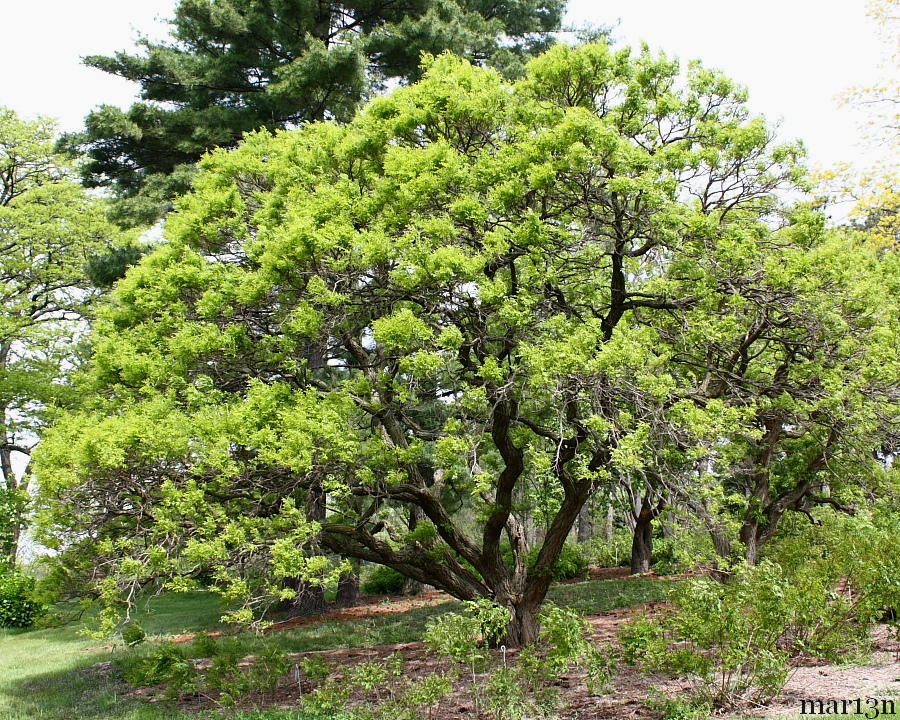
Robinia pseudoacacia 'Umbraculifera'
|
Black locust grows naturally on a wide range of sites but does best on rich moist limestone soils. It has escaped cultivation and become naturalized throughout eastern North America and parts of the West. Black locust is not a commercial timber species but is useful for many other purposes. Because it is a nitrogen fixer and has rapid juvenile growth, it is widely planted as an ornamental, for shelterbelts and for land reclamation. It is suitable for fuelwood and pulp and provides cover for wildlife, browse for deer, and nest cavities for birds.
Black locust has a disjunct original range, the extent of which is not accurately known. The eastern section is centered in the Appalachian Mountains and ranges from central Pennsylvania and southern Ohio, south to northeastern Alabama, northern Georgia, and northwestern South Carolina. The western section includes the Ozark Plateau of southern Missouri, northern Arkansas, and northeastern Oklahoma, and the Ouachita Mountains of central Arkansas and southeastern Oklahoma. Outlying populations appear in southern Indiana and Illinois, Kentucky, Alabama, and Georgia. Black locust has been planted widely and has become naturalized throughout the United States, southern Canada, and parts of Europe and Asia.
Although considered a weed or invasive in some regions, the tree also serves as a good erosion control plant on critical and highly disturbed areas, due to its ease of establishment, rapid early growth and spread, and soil building abilities.
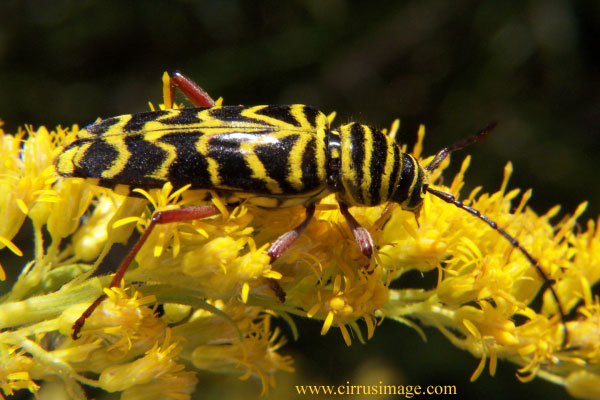
This species has been planted outside its natural range, and can crowd out other plants, particularly in sandy soils. This plant is considered noxious and/or invasive in some states, and may displace desirable vegetation if not properly managed. Black locust has a shallow, aggressive root system. The bark of black locust is deeply furrowed and is dark reddish-brown to black in color. It has an alternate branching pattern, which creates a zigzag effect. A pair of sharp thorns grows at each node. They are ½ to ¾ inches long, and very stout. The separate male and female plants have sweetly fragrant flowers that are creamy white with five petals (bean-like) arranged in a pyramidal spike. They usually bloom in May or June. Heavy seed production can be expected annually or biannually. The legume type seed is produced in a flat, brown to black pod, which is 2 to 4 inches long. There is an average of 25,500 seeds per pound. although black locust is a good seed producer, its primary means of spread is by both rudimentary and adventitious root suckers. Damaging Agents- Black locust is severely damaged by insects and disease, probably more than any other eastern hardwood species. Ubiquitous attacks by the locust borer (below) and by the heart rot fungi Phellinus rimosus or Polyporus robiniophilus make growing black locust for timber production impractical. Locust borer larvae construct feeding tunnels throughout the wood, and the holes serve as entry points for heart rot fungi that cause extensive wood decay. Locust borer attacks can begin at a young age and damage can be so extensive that trees are not even suitable for fence posts. Many plantations planted in reclamation projects were seriously damaged, but more trees could be used if cut as soon as they reach post or mine-prop size. Slow-growing trees on poor sites are most susceptible to borer attack. On sites where tree vigor is low, repeated attacks often reduce black locust to sprout clumps. |
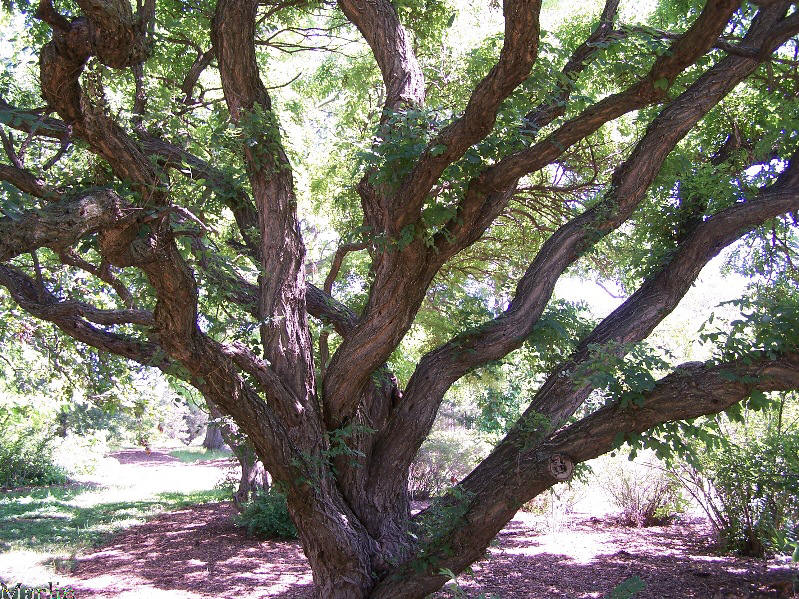
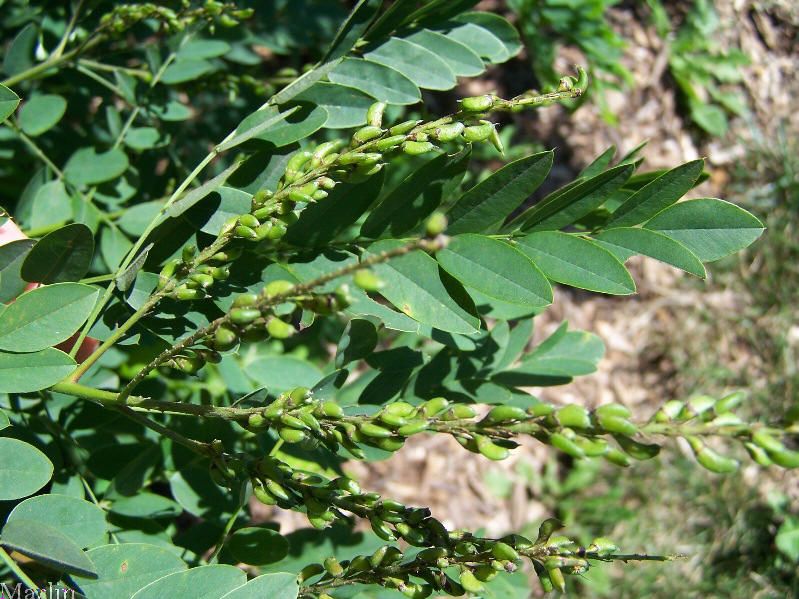
| References 1. Umbrella Black Locust, Morton Arboretum accession 489-57-1 photos: Bruce Marlin |
| Tree Encyclopedia / North American Insects & Spiders is dedicated to providing scientific and educational resources for our users through use of large images and macro photographs of flora and fauna. |
|
Family: Fabaceae (Leguminosae) |
