Kentucky Wisteria – Wisteria macrostachya
Family: Fabaceae (Legumes)
USDA Hardiness Zone: 3. Seeds and pods of the Wisteria are reported toxic to humans.
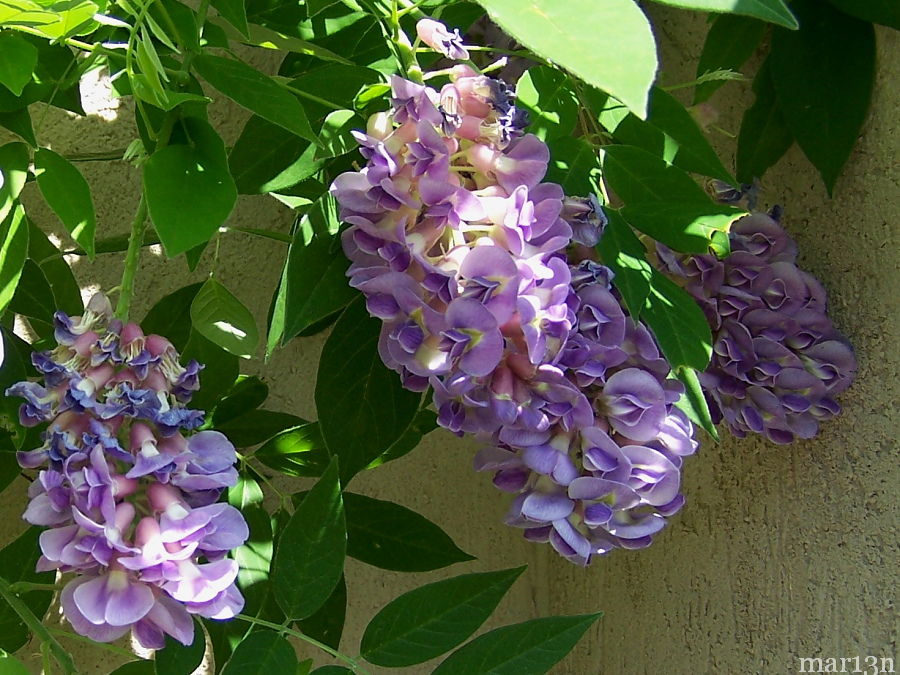
Kentucky Wisteria is a woody deciduous vine native to in the southeastern United States. It is very similar to the American Wisteria (Wisteria frutescens). Kentucky Wisteria bears unscented bluish-purple flowers in racemes 15-30 cm long, a generally average length for the Wisteria family. It produces these flowers after growing only two to three years, making it the quickest wisteria to bloom. Otherwise, its soil and light requirements, behavior, and characteristics are identical to the American Wisteria.
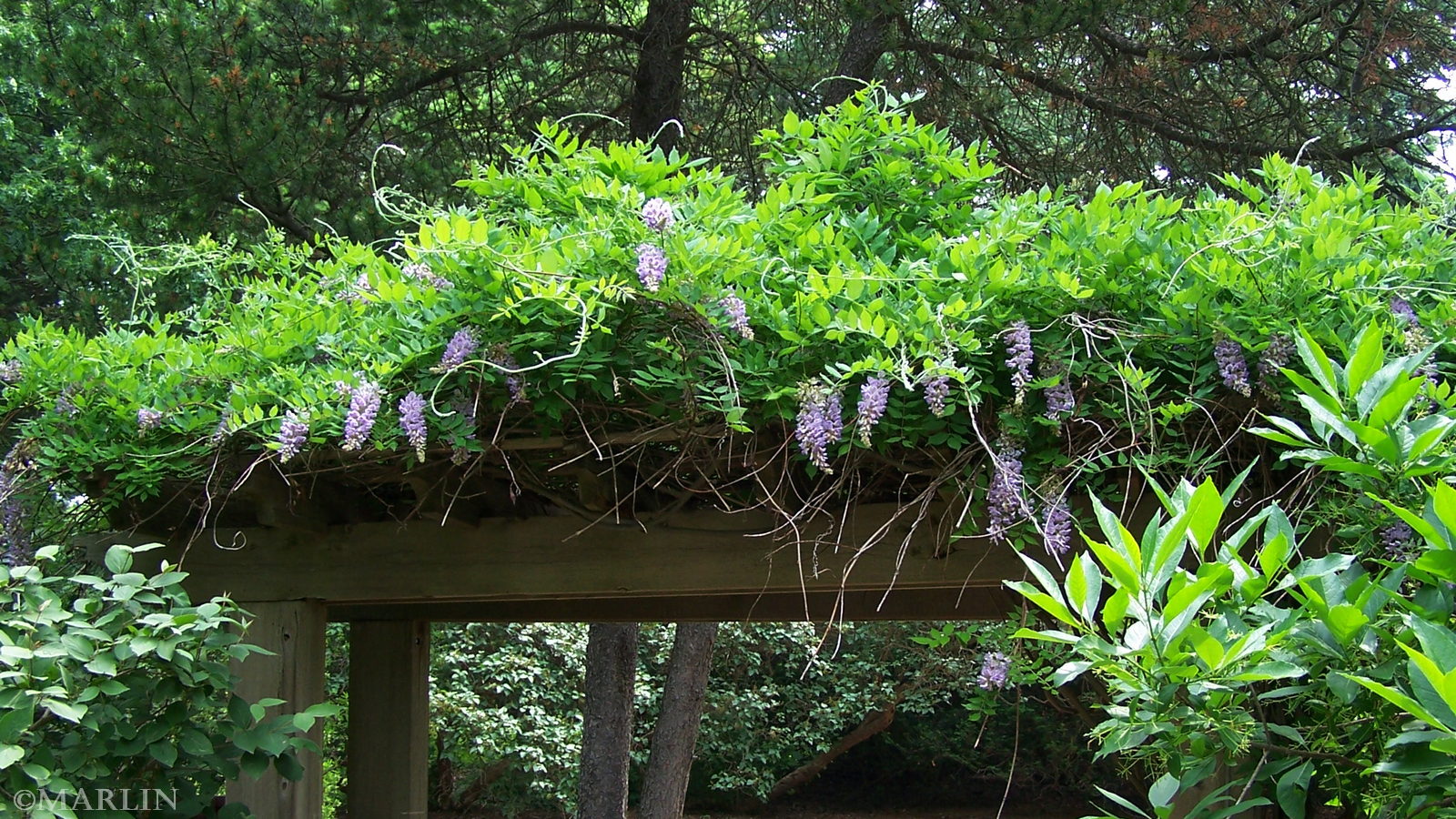
The wisteria are vigorous twining vines that grow to 25 or 30 feet. These vines are most valued for their long, pendant clusters of violet-blue flowers. Varieties are available that produce flowers of varying colors (from white to pink to deep reddish and bluish-violet). Beanlike velvety pods remain after the leaves fall but are not particularly ornamental. All wisterias will bloom, but some vines take as long as 7 to 15 years to produce their first flowers.
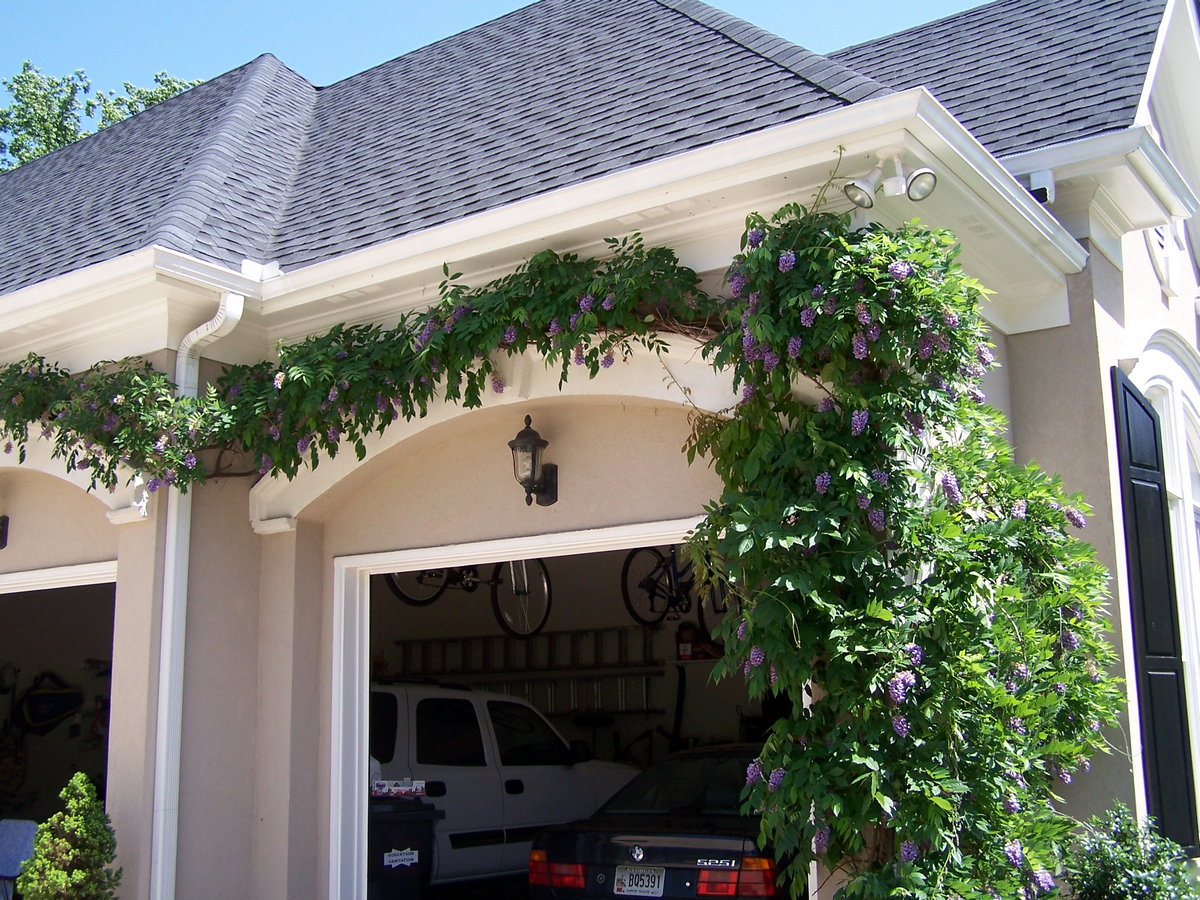
Near Atlanta Georgia
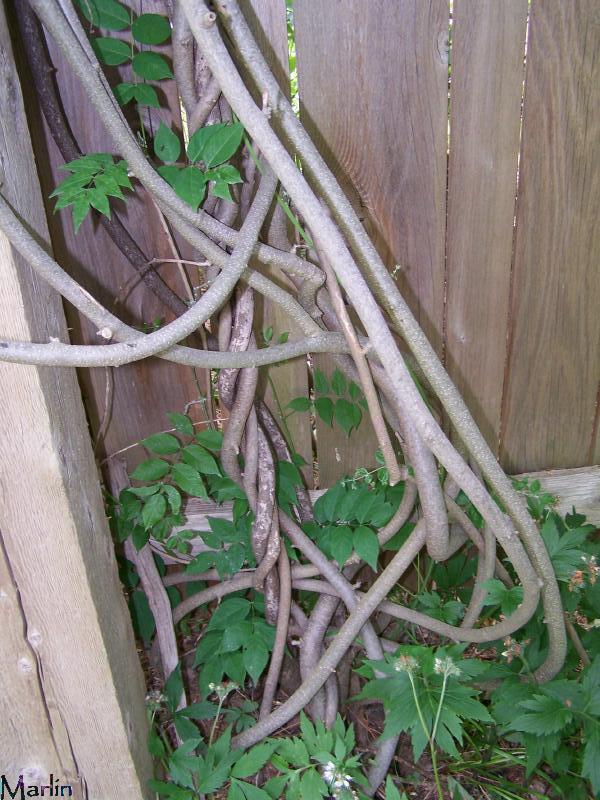
The following practices may help induce flowering: An application of super phosphate in early spring, Severe pruning of the new growth in late spring or early summer, Root pruning by cutting some of the roots with a spade a few feet from the trunk in late fall. Grafted plants or plants that have flowered in the nursery are recommended.
Wisterias are excellent for training on stoutly constructed arbors and pergolas (figure 2). They are best when trained horizontally on a wire or structure 10 to 20 feet above the ground. The vines are excellent for use on open-structured roofs over patios and terraces. Do not plant too closely to trees or shrubs as it will choke them out.
Wisterias sometimes are grown as standards or trees. The plant must be staked in an upright position with the branches removed 4 to 5 feet up the stem and the top pruned heavily. A vigorous, flowering vine may be maintained by pruning back long branches to within five buds from their point of origin in early summer. Repeat this pruning in late summer on new shoots that develop. Remove all thin and weak growth immediately after flowering or in late winter. Wisterias prefer a deep, rich, moist, well-drained soil high in organic matter. A sunny location will favor maximum flower production.
Family: Fabaceae (Legumes)
Trees Index | Pine Family | Beech, Oak | Nut Trees | Birch Family | Magnolias
Tree Encyclopedia / North American Insects & Spiders is dedicated to providing family-friendly educational
resources for our friends around the world through large images and macro photographs of flora and fauna.
Online since 2002