Western Yellowjacket – Vespula pensylvanica
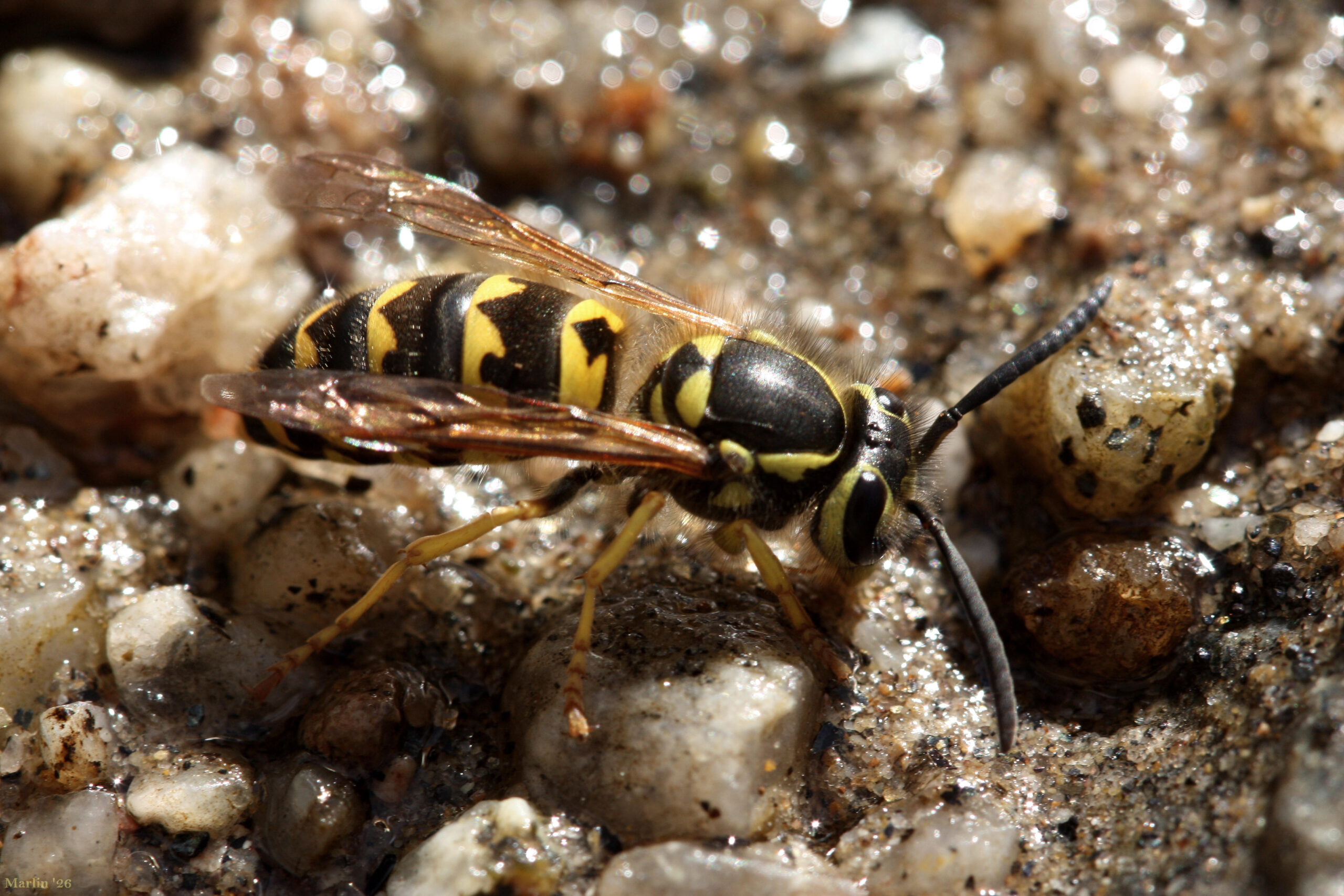 Western Yellowjacket – Vespula pensylvanica Taking on water at the headwaters of the Arkansas River
Yellowjackets are considered quite beneficial to agriculture since they feed voraciously on agricultural pests, but they become a nuisance when they scavenge for food at picnics or other outdoor venues where food or sugary beverages are served. Many are attracted in large numbers to garbage cans, others fly in and out of nests built around homes, buildings and areas where people live.
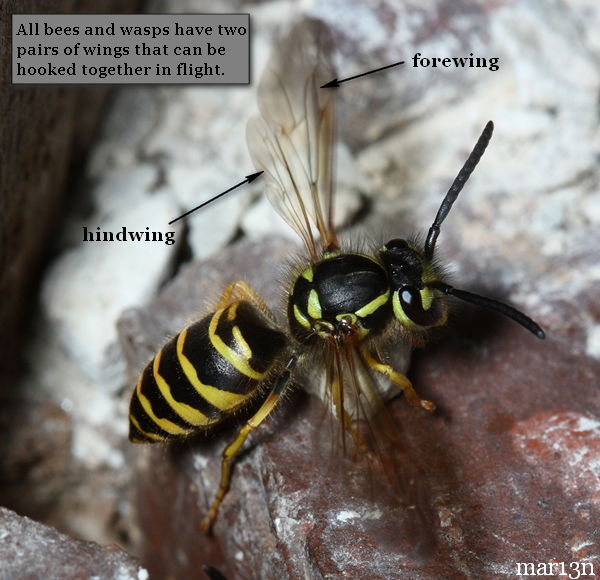
Eastern yellowjacket leaving underground nest
My dad once asked me to eradicate a nest right next to his back door, and I very reluctantly agreed. The wasps were entering and leaving their underground colony via a hole in a railroad tie landscape timber. Well, kids, this turned out to be a gigantic nest of wasps, despite it modest entrance. A can of Raid flying insect spray later, my dad and I had both been stung multiple times, and those yellowjackets were VERY riled up.
Yellowjackets don’t have barbs on their stingers like honeybees. They’ll grab onto your clothing and just keep stinging you until you get the picture and swat them to the ground – and it takes a healthy swat, too. The stings were very painful and itched and burned for days afterwards, and that nest lived on and prospered for the rest of the year.
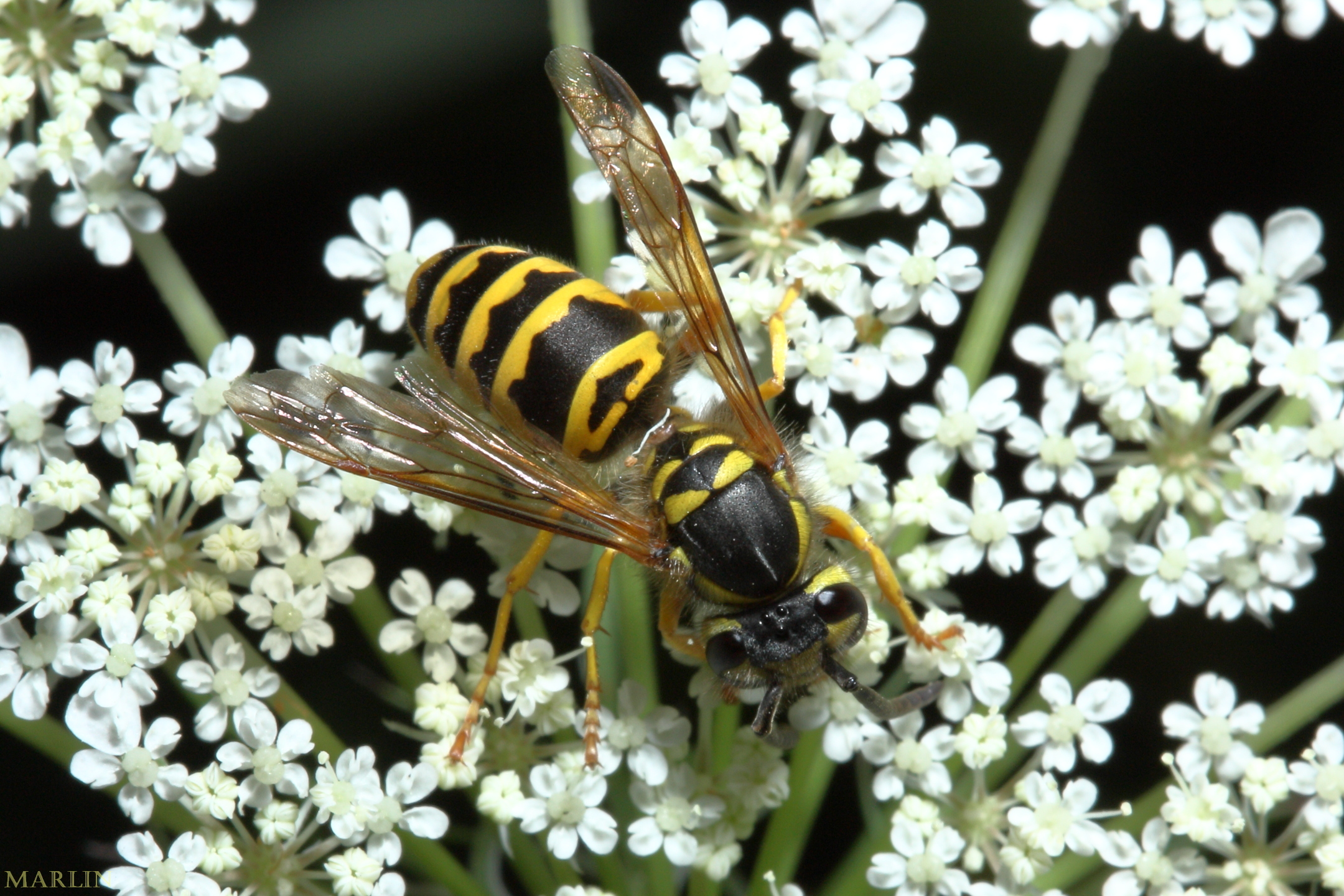 Compare to: Eastern Yellowjacket – Vespula maculifrons
Yellowjackets are social wasps living in colonies containing workers, queens and males. Colonies are annual with only inseminated queens overwintering. Fertilized queens occur in protected places as hollow logs, in stumps, under bark, in leaf litter, in soil cavities and human-made structures. Queens emerge during the warm days of late April or early May, select a nest site and build a small paper nest in which eggs are laid. After eggs hatch from the 30 to 50 brood cells, the queen feeds the young larvae for about 18 to 20 days. Larvae pupate, emerging later as small, infertile females called workers. By mid-June, the first adult workers emerge and assume the tasks of nest expansion, foraging for food, care of the queen and larvae, and colony defense.
Bees & Wasps Index | Bees & Wasps
Tree Encyclopedia / North American Insects & Spiders Online since 2002