Two-Striped Grasshopper – Melanoplus bivittatus
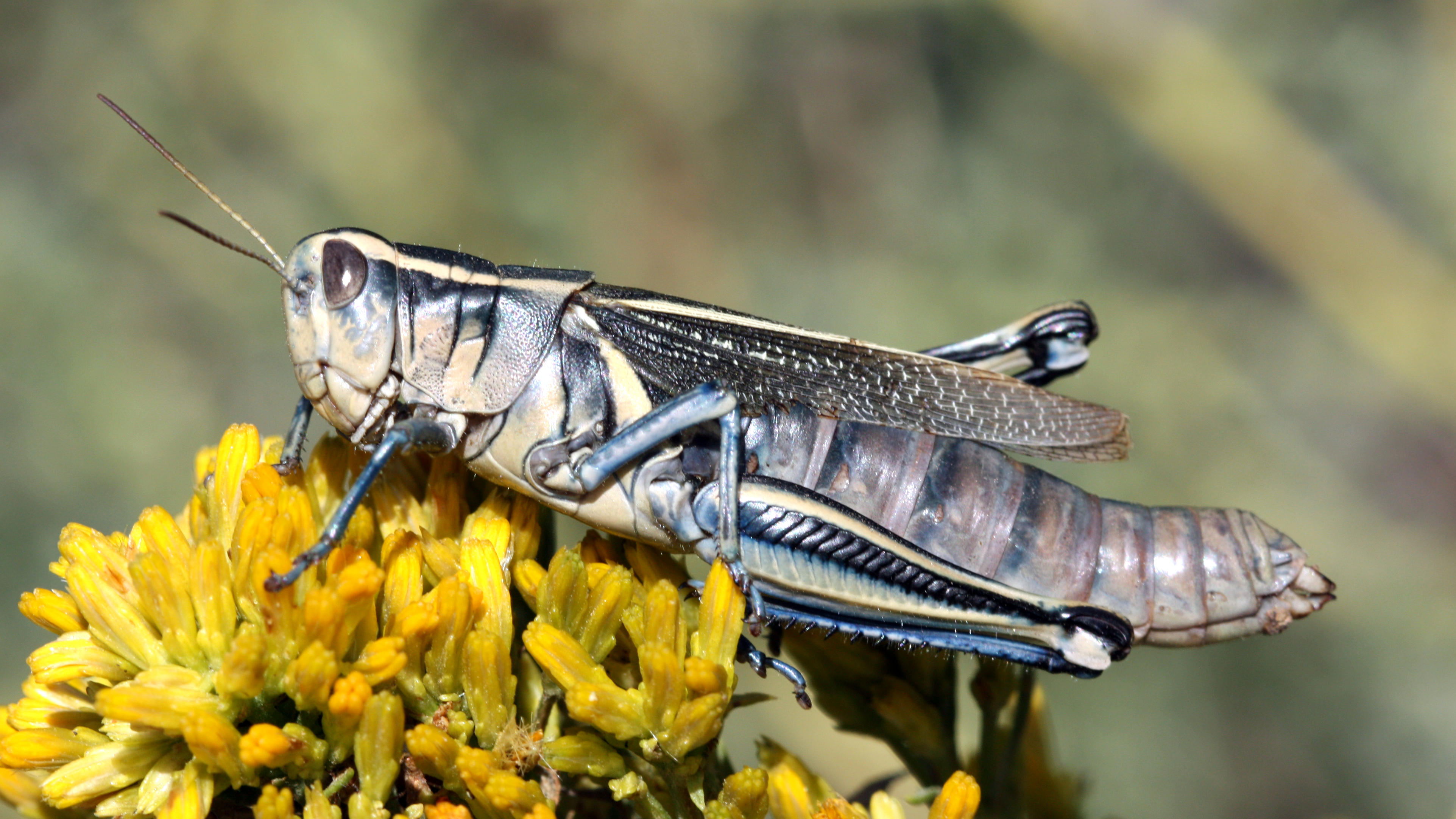 Melanoplus bivittatus, commonly called the two-striped grasshopper, is one of the most common hoppers in North America. This decidedly blue specimen is an egg-laden female found at 6500 foot elevation in the Rocky Mountains near Dotsero, Colorado. Melanoplus grasshoppers are herbivorous, feeding on grasses and leafy plants.
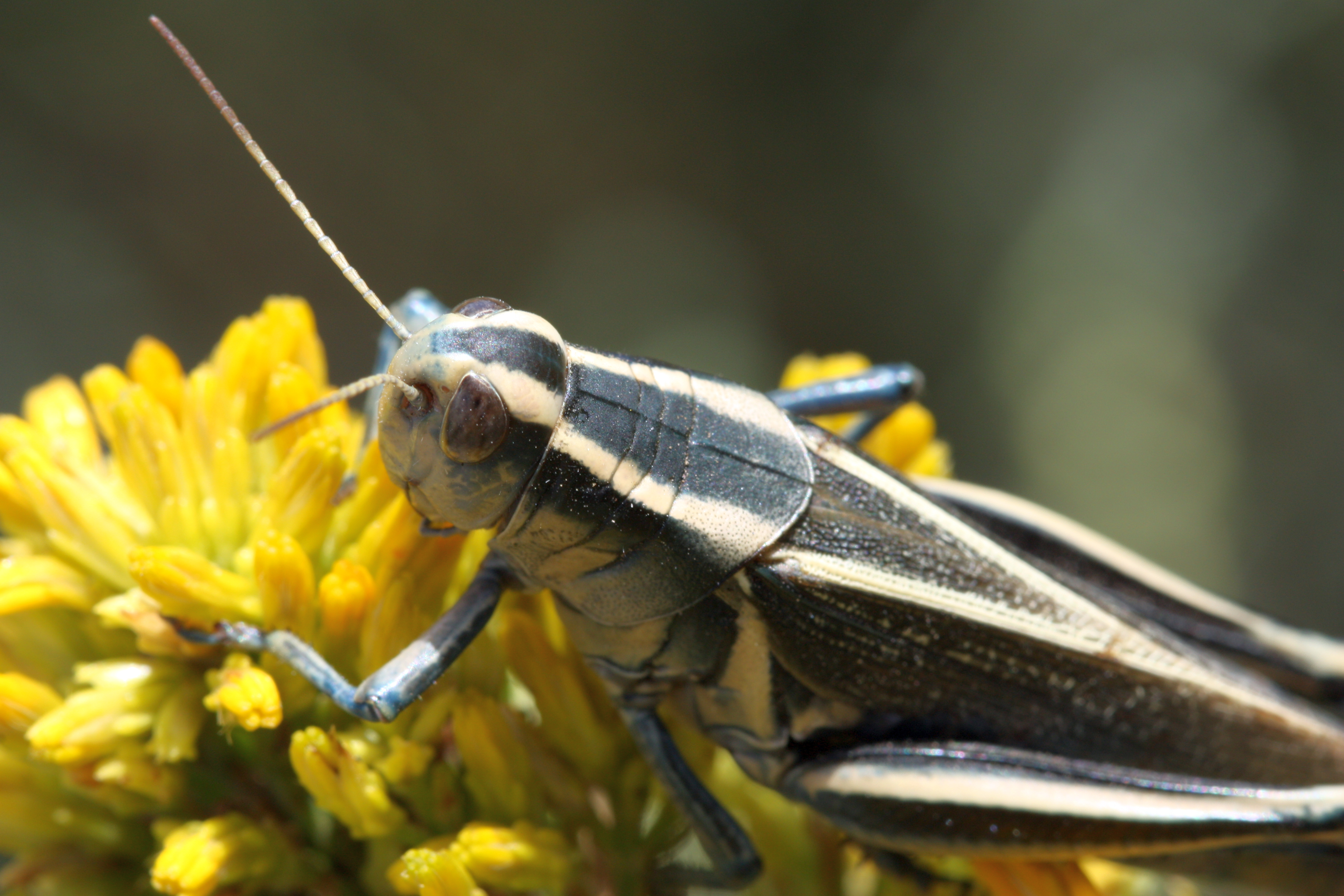 Grasshoppers have antennae that are almost always shorter than the body (sometimes filamentous), and short ovipositors. Those species that make easily heard noises usually do so by rubbing the hind femurs against the forewings or abdomen (stridulation), or by snapping the wings in flight. Tympana, if present, are on the sides of the first abdominal segment. The hind femora are typically long and strong, fitted for leaping.
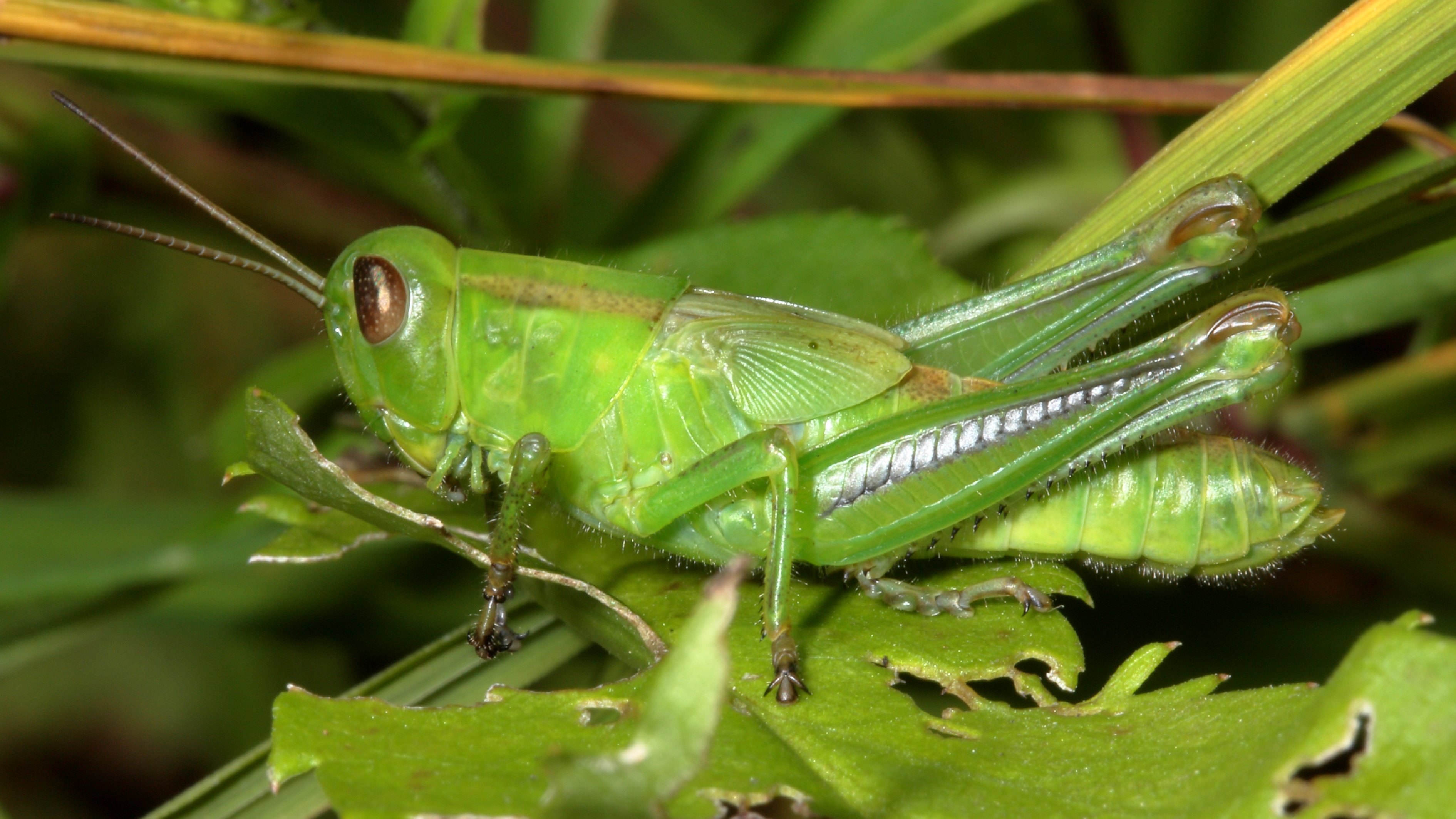 5th instar nymph
The membranous hind wings are used for flight, while the front wings (tegmina) are used as covers for the flying wings, much as beetles use their hardened elytra. Females are almost always larger than males. Males have a single unpaired plate at the end of the abdomen. Females have two pairs of valves ( triangles) at the end of the abdomen used to dig in sand when egg laying.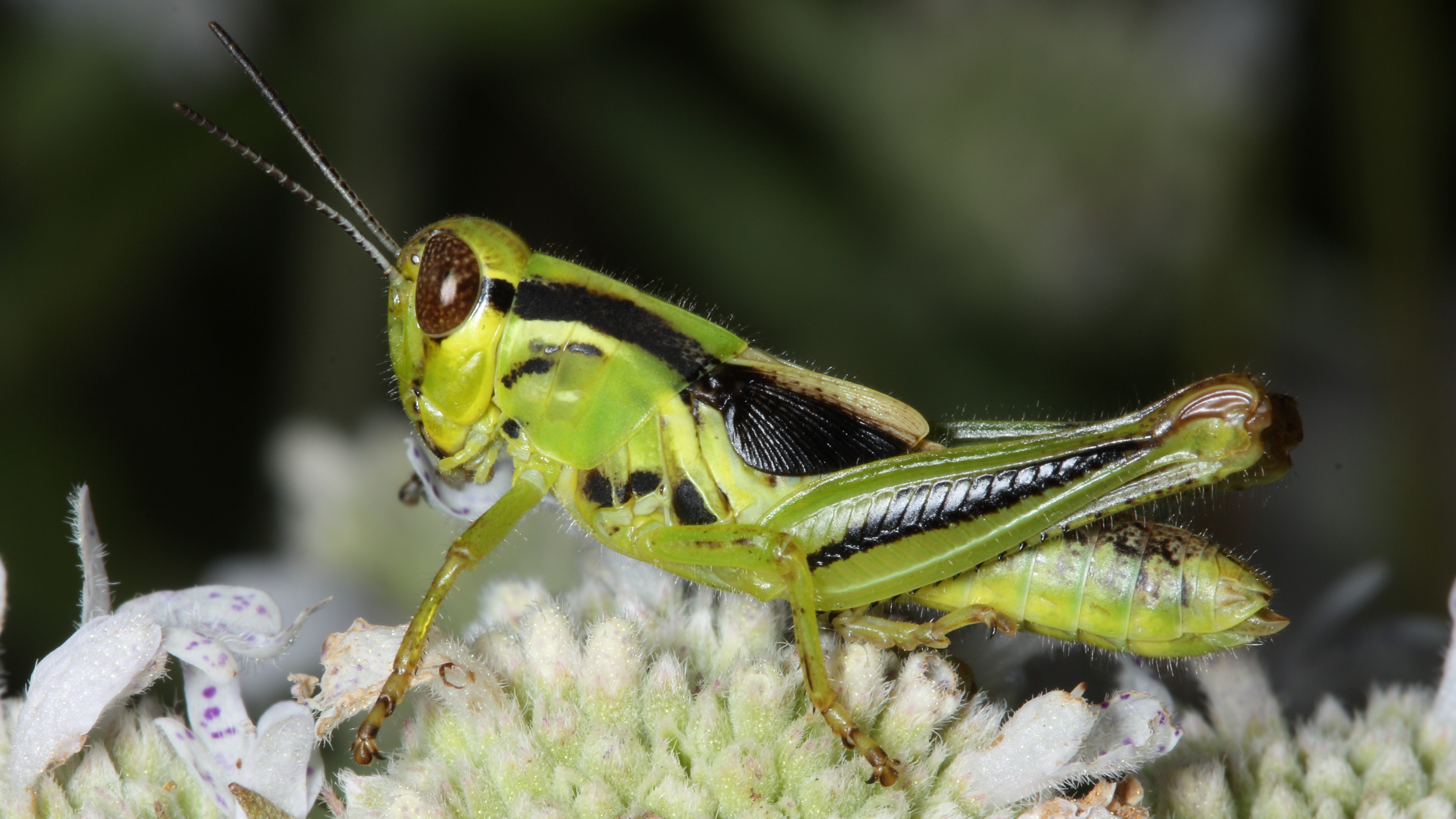 Fifth instar female nymph, about 20mm
There are more than 20,000 species in the order Orthoptera. These diverse insects are found worldwide, although their numbers are concentrated in the tropics. They vary in size from less than 5mm to monster-big grasshoppers over 4 inches long, with 10-inch wingspans. Orthopterans are some of the most common insects in many landscapes, and the order includes some of the most destructive agricultural pests in the locusts and katydids. Most eat plants, but some species are omnivorous.
Females typically lay clutches of eggs either in the ground or on vegetation. Grasshoppers, crickets and katydids are all well-known for their jumping ability as well as the singing performed by the males (females are generally silent.) Grasshoppers are almost all active in the daytime, but crickets are nocturnal. Katydids are thought to be nocturnal, but I see an awful lot of them out and about when the sun is shining. There are few places on earth where the calls of these intriguing insects are not heard nearly constantly during the warm months. The first fossil records of the order appear in the upper Carboniferous, or Pennsylvanian era, 310 – 290 million years ago.
References
- Bugguide.net, Family Tetrigidae – Pygmy Grasshoppers
- Bugguide.net, Pygmy Grasshopper Nymph – Paratettix cucullatus
- Bugguide.net, Pygmy Grasshopper – Tetrix arenosa
